
How Vienna Stopped Suleiman the Magnificent and His Mighty Army

AI Image - Copyright © Realniistorii.com
September 1529. Beneath the walls of Vienna, the air is heavy, saturated with the scent of damp earth, rotting straw, and the smoke of thousands of fires. The torrential rains, which have not ceased for weeks, have turned the battlefield into a muddy swamp, swallowing the heavy artillery of Suleiman the Magnificent. At this critical juncture in history, True Stories revisits an event that changed the fate of the continent forever. The silence between the salvos of the Ottoman cannons is more frightening than the roar itself, for within it lies the realization that an empire has reached its limit.
The Siege of Vienna in 1529 was not merely a military clash; it was a collision of civilizations where logistics and nature proved stronger than the most powerful army of the era. While the city's defenders, led by Wilhelm von Roggendorf, clung to their survival, the Ottoman forces struggled with disease, famine, and the impossibility of transporting their heavy siege cannons through the mud of Central Europe. This was the moment when the myth of the Sultan’s invincibility began to crack under the weight of historical reality.
A Chronicle of the Military Clash
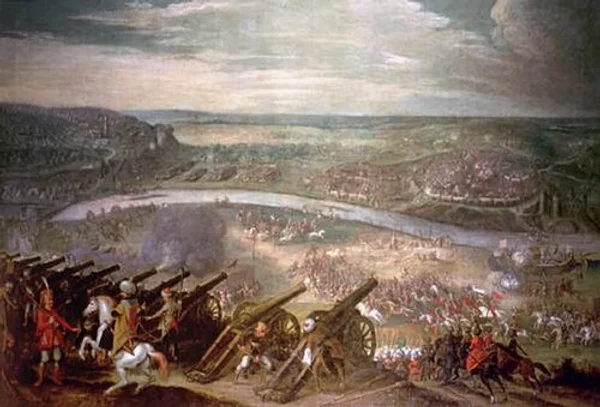
On September 27, 1529, the Ottoman army began a massive bombardment against the walls of Vienna. Suleiman the Magnificent, believing in a swift victory, deployed his elite Janissary units for the final assault. However, the defenders were prepared—they had razed the suburbs to deny the enemy cover and had reinforced the weak points in the medieval walls. The psychological state of the besieged was on the edge, but discipline remained ironclad, fueled by the fear of total annihilation.
Ottoman engineers attempted to undermine the walls by placing mines in tunnels dug beneath the city's foundations. In response, the Viennese defenders used primitive but effective methods to detect vibrations from the digging, placing bowls of water or drums along the walls. When the water rippled, they knew exactly where the enemy was attempting to breach. This game of cat and mouse continued for days, with every failed mine weakening the morale of the Ottoman troops, who were forced to wade through freezing mud.
On October 14, after another failed assault, Suleiman made the fateful decision to retreat. His army, exhausted by the lack of provisions and the onset of winter, began the long journey back to Belgrade. This was not merely a tactical withdrawal, but an admission that the Siege of Vienna in 1529 had reached its logical end. The losses were immense, and the prestige of the empire was severely shaken in the eyes of all Europe.
The Investigation and Hidden Clues
Historical archives, including those of the Habsburgs1, reveal that the success of the defense was due not only to bravery but also to the catastrophic logistical errors of the Ottomans. Documents show that Suleiman underestimated the time required to transport heavy artillery across the Balkans. The massive cannons intended to demolish the walls were abandoned in the mud even before reaching Vienna, leaving the army without the necessary firepower for a breach.
In official Ottoman military chronicles2, the event is described with restraint, often emphasizing “divine will” and bad weather rather than tactical failures. Nevertheless, interrogations of captured soldiers revealed a harrowing reality: the lack of fodder for horses and epidemics of dysentery killed more soldiers than the city's defenders. One contemporary chronicler noted in his report:
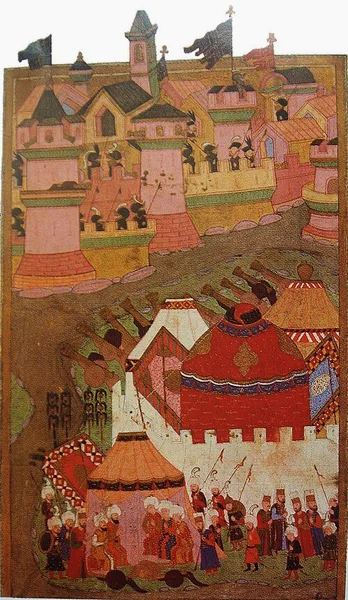
“The Sultan’s army, though numerous, proved to be a prisoner of its own weight. The rains turned the roads into rivers, and hunger became a more fearsome enemy than the swords of the Christians.”
These clues prove that the Siege of Vienna in 1529 was doomed even before the first shot was fired. Hidden evidence in the archives suggests that Habsburg intelligence was excellently informed about the state of the Ottoman ranks, which allowed the defenders to allocate their resources with surgical precision.
A Clash of Hypotheses: Official Version vs. The Unspoken
For a long time, it was believed that Vienna was saved solely thanks to a miracle or the heroic self-sacrifice of a few knights. Official 16th-century historiography often mythologized the event to emphasize the religious aspect of the conflict. However, modern analysis of logistical data reveals a much more prosaic picture: the Siege of Vienna in 1529 was a failure of imperial administration, which failed to secure the army's supply lines during the early winter season.
There are theories that Suleiman knew the siege was impossible from the start but continued due to political pressure in Istanbul. Some historians suggest the retreat was planned as a demonstration of power rather than an attempt at total conquest. This hypothesis, however, clashes with the fact that the Ottomans left behind a massive amount of equipment, which would be difficult to reconcile with a “planned” withdrawal.
Contradictions in documents often stem from the need for both sides to present the event as a victory. For the Habsburgs, it was a triumph of the Christian world, while for the Ottomans, it was a “punitive expedition” that achieved its goals without the need for occupation. The truth, hidden in the dusty folders of imperial archives, is that the Siege of Vienna in 1529 was a strategic dead end that exhausted both sides.
Resolution, Traces in Time, and the Unclosed Page
After 1529, Vienna became a symbol of resistance, and the House of Habsburg3 solidified its status as the primary defender of Central Europe. The history of this dynasty, whose representatives such as Otto von Habsburg and Regina von Habsburg remained in Europe's memory centuries later, is inextricably linked to this moment. The city was transformed, its walls were strengthened, turning it into an impregnable fortress that would hold for another century until the next great siege in 1683.
Today, as you walk the streets of Vienna, it is difficult to imagine the mud and horror of 1529. But if you look closely at the old foundations of the city, traces of those fateful days can still be found. The Siege of Vienna in 1529 remains an unclosed page in history, reminding us that even the greatest empires are vulnerable to time and nature. What would have happened if the rains had stopped a week earlier? This question continues to intrigue historians, leaving us with the feeling that the fate of the world often hangs by a thread of a meteorological phenomenon.