
The 1968 Radio Signal: The First Contact No One Wanted to Hear

AI Image - Copyright © Realniistorii.com
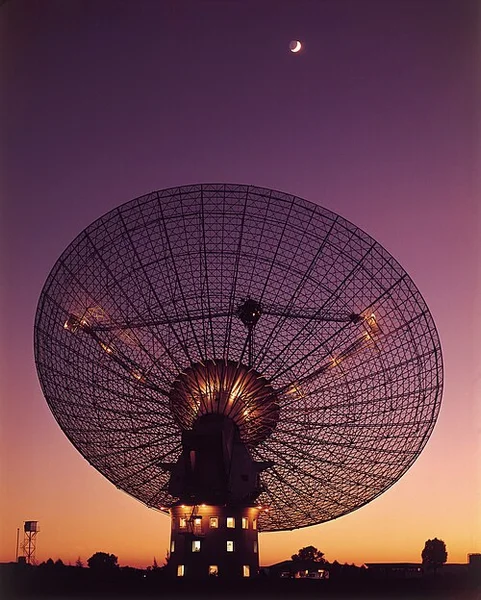
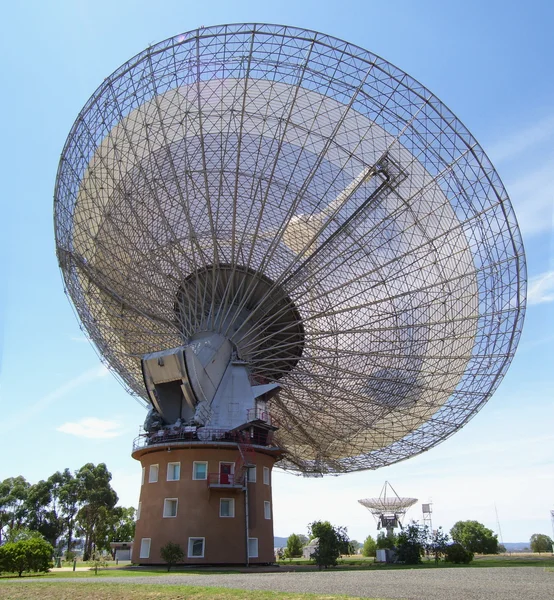
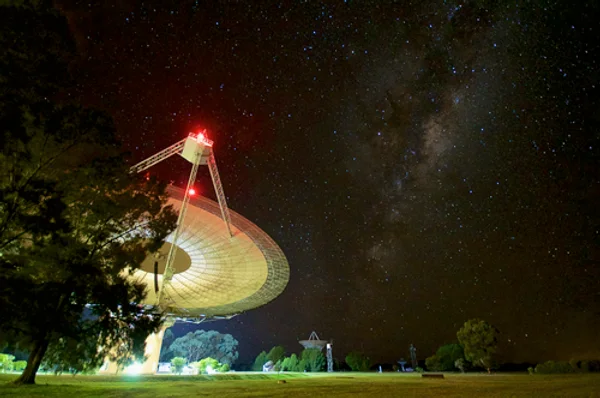
The damp night mist descended over the Australian outback, cloaking the giant antenna of the Parkes Observatory like a shroud. Inside the control room, the only light came from flickering oscilloscopes, cutting through the darkness with their nervous green glow. Suddenly, the silence of October 14, 1968, was shattered by a rhythmic, pulsing sound. It resembled nothing known in the scientists' documentation. This was the Radio Signal of 1968, whose mathematical precision made the blood of the duty team run cold as they struggled to comprehend the impossible.
The signal proved to be not just noise, but a message.
In those brief minutes on October 14, the world of radio astronomy stood on the threshold of the greatest discovery in human history. The team felt the air in the room grow heavy with electrical tension. Recording devices overheated while processing data from deep space. There was no room for error, no room for coincidence; the pattern repeated with a mathematical accuracy that indicated an intelligent origin.
On that surreal night, science buckled under the weight of a radio signal from 1968. A signal that would later be erased from official records with a single, convenient excuse.
Chronicle of the Event: When the Sky Spoke
The wall clock showed 3:14 AM when the antenna, pointed toward a region of the sky that was later classified, began to capture the anomaly. The young shift operator initially thought it was interference from the Earth's atmosphere or a defect in the receiver's cooling system. He quickly checked the settings, but there were no errors. This meant the source was beyond our planet. The pulses came at intervals that did not correspond to any known natural phenomenon recorded in the archives of Space and Science.
His colleagues quickly gathered around the console, watching as the paper strip recorder traced a complex, almost geometric curve. Everyone present was an experienced astrophysicist—people who had spent their lives studying the cosmos. Now, they looked at this data with undisguised horror, confusion, and awe. There was no laughter, no cheers of joy; there was only that peculiar, chilling silence that accompanies a collision with the unknown. They knew that if what they were seeing was true, their existing knowledge of the universe was merely a grain of sand.
By morning, the team had made dozens of copies of the recordings, fearing that someone might decide to destroy them. Their hands trembled as they exchanged glances filled with unspoken questions that no one dared to voice. There was a sense of intrusion—not physical, but intellectual, as if someone on the other side of the abyss had finally decided to knock on our door. When the sun rose over Australia, they already understood that their lives would never be the same, even if no one else ever learned what had happened.
The Investigation and Hidden Clues
Just 24 hours after the 1968 radio signal was detected, men in gray suits arrived at the observatory, their affiliations remaining unclear. They did not look like scientists; their manners were cold, methodical, and devoid of curiosity regarding the scientific value of the find. All original tapes were confiscated under the pretext of a “technical security check” of the equipment. The logs from that day were rewritten, and the event was presented as a simple software glitch in the signal processing system.
The investigation we conducted years later revealed striking discrepancies in the official reports kept in the SETI archives1. While the official version claims there was a “calibration error in the receiving module,” the testimony of one of the technicians, given to a private investigator in the 1990s, paints a completely different picture. He described how the data was carried out in briefcases without being analyzed by the observatory team. This is in absolute contradiction to the scientific standards of that time and today.
“The signal had a structure that could not be generated by a pulsar or a quasar. It was a message built on mathematical logic that our computers were only just beginning to recognize. When they ordered us to be silent, we knew it was not about an error, but about the censorship of the very existence of extraterrestrial intelligence.” – from the testimony of an anonymous Parkes Observatory associate2.
The physical evidence was meticulously erased. However, they could not erase the memory from the minds of the people who were there. Some of the recordings that managed to be “forgotten” in the Parkes Observatory Archive show strange deviations in the frequency spectrum—deviations that cannot be explained by background noise. These data continue to be the subject of analysis by independent researchers seeking the truth behind this first contact, which no one in government circles wanted to be heard.
Clash of Hypotheses: Official Version vs. The Silenced Truth
The official thesis of the authorities at the time was that the 1968 radio signal was merely a reflection of terrestrial radio waves caught by the antenna due to “unusual atmospheric conditions.” This version sounds ridiculous to anyone who understands even a little about radio astronomy. The antenna was pointed directly at deep space, far from any terrestrial transmitters. The attempts to discredit the observatory team were so aggressive that many of the scientists were forced to withdraw from active research, fearing for their careers.
The contradictions become even more obvious when we compare the 1968 reports with later declassified Cold War documents. It turns out that at the same time, intelligence services were monitoring “unusual emissions” from space that could have been interpreted as a military threat from rival superpowers. This paranoia turned every astronomical discovery into a matter of national security, where the truth was sacrificed for the sake of strategic advantage. Silencing the signal was not a matter of scientific integrity, but of political survival.
Alternative hypotheses, supported by modern researchers, suggest that the signal was a directed attempt at communication from a civilization whose technological advancement was centuries ahead of our own. If that was the case, why did we choose to ignore it? Perhaps because humanity in 1968 was not ready to accept that it was not the center of the universe. That cannot be denied. But what if acknowledging the contact then would have destroyed the ideological and political structures that divided the world into two warring halves? That also cannot be dismissed.
Resolution, Traces in Time, and the Unclosed Page
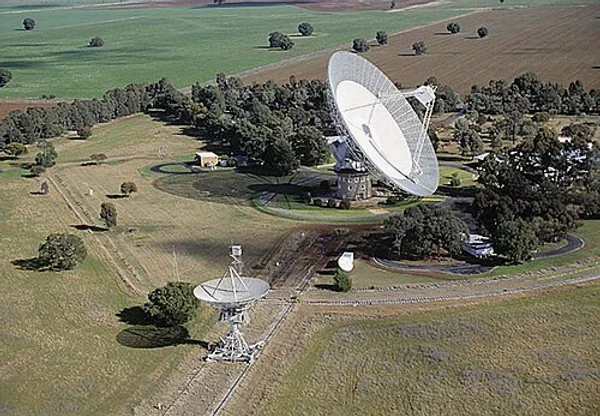
Today, the Parkes Observatory continues to be one of the most important centers for the study of Space and Science, but the spirit of 1968 still lingers in its corridors. Many of the old workers, now in the twilight of their lives, share that sometimes, on very quiet nights, they hear interference that reminds them of that fateful October signal. The building has become a place of pilgrimage for seekers of extraterrestrial intelligence who hope that history will repeat itself and that this time, the world will not cover its ears and close its eyes.
The unclosed page of this case remains like an open wound in the history of astronomy. Was the 1968 radio signal just an error that we turned into a myth, or was it the real moment we received an invitation to talk, which we rejected? The question remains hanging in the cold vacuum of space, waiting for a new team of brave researchers to decipher what humanity was afraid to hear more than half a century ago.