
Sir Nicholas Winton and the Rescue Trains: The Quiet Hero of Prague

AI Image - Copyright © Realniistorii.com
March 14, 1939. Prague is gripped by an icy winter wind that pierces the walls of hotel rooms, but the true chill comes from the approaching march of the Wehrmacht. In a small, smoke-filled room, a young stockbroker from London flips through lists of names while the boots of the occupiers echo outside. Nicholas Winton was neither a spy nor a military strategist, yet in this critical moment, he took the weight of the impossible upon his shoulders. Sir Nicholas Winton and the rescue trains became the only hope for 669 children whose lives were measured in documents, stamps, and desperate pleas to British immigration authorities.
The air was heavy with the scent of coal smoke and fear. Winton, only 29 years old, acted with surgical precision, forging documents and bribing bureaucrats to secure exit visas for the most vulnerable. Every second was stolen from the inevitable, and every child placed on a train was a victory against a machine of destruction. He sought neither recognition nor fame; his mission was dictated by a purely human impulse in a world rapidly losing its humanity. This story is part of our Inspiring archives, which remind us that one person can change the course of history.
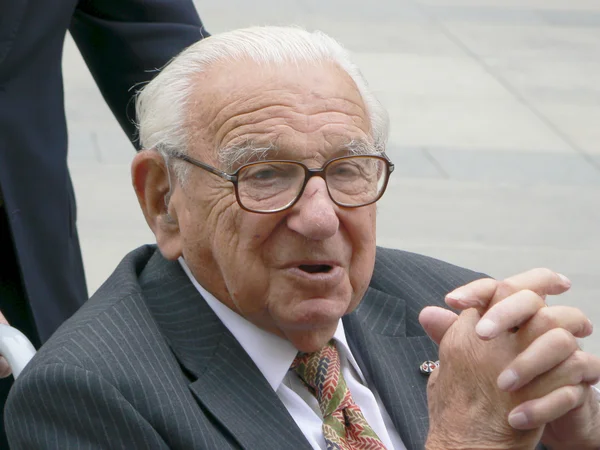
Chronicle of the Event: The Clock of Fate
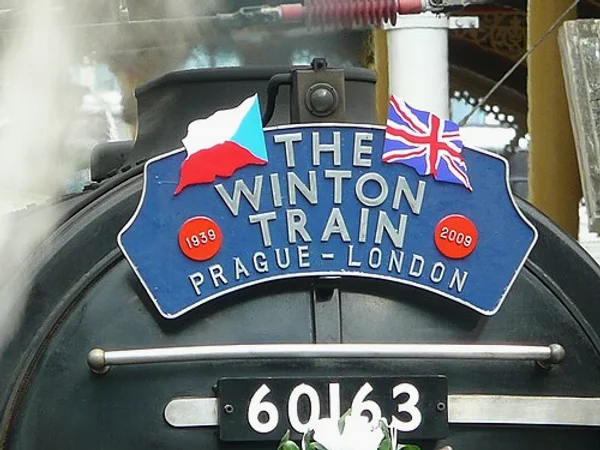
The operation began in the chaos of pre-war Czechoslovakia, where families lined up at Winton's small office. He used his contacts in London to persuade the British government to accept these children, requiring a guarantee of £50 for each one—a colossal sum for that time. The trains departed from Prague, crossed Germany, and reached the ports, from where the children headed into the uncertainty of the United Kingdom. Each child wore a tag with their name and the hope that their parents would appear at the station in London, though many would never see them again.
Inside the carriages, the atmosphere was surreal; children tried to play while the adults in the compartments watched the windows with heavy hearts. Winton coordinated everything from his base, working 18 hours a day to ensure every list was accurate and every residence permit was signed. He faced the indifference of officials who saw the children only as numbers and administrative burdens, not as human lives. Sir Nicholas Winton and the rescue trains became a symbol of quiet resistance that required no weapons, only courage and persistence1.
When the final train, scheduled for September 1939, was stopped at the border due to the outbreak of war, Winton experienced his darkest moment. He knew that 250 children remained trapped in Prague, doomed to a fate he could not prevent. This was the scar he would carry for the rest of his life, never forgiving himself for not being able to get everyone out. Every child who boarded the train was saved, but every one who remained was a memory that haunted him in the quiet of the night.
The Investigation and Hidden Clues: A Notebook in the Attic
For five decades, the story remained buried under the dust of daily life until 1988, when his wife, Grete, discovered an old, worn notebook in their attic. In it were lists of names, addresses of foster families in England, and blurred photos of children who had long since become adults. Nicholas Winton had never mentioned anything about it, even to his closest loved ones, considering his actions a completed task that did not deserve publicity. The documents, preserved in the BBC Archives, reveal the scale of his logistical network.
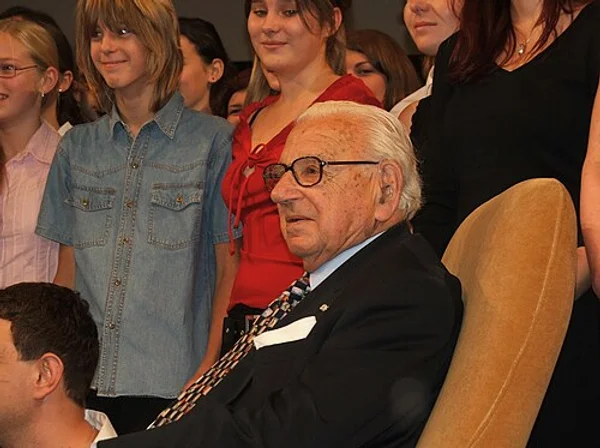
"I didn't do anything extraordinary. I saw a problem, I knew I could help, and I did. Every child we saved was an opportunity for a future that would otherwise have been nipped in the bud." – from the memoirs of Sir Nicholas Winton.
The investigation of these documents reveals discrepancies between official evacuation reports and Winton's personal notes. It turns out he acted almost entirely on his own, with minimal support from official organizations, often bypassing the strict rules of the immigration office. The hidden clues in the notebook—codes, names of steamships, and addresses of London shelters—paint a portrait of a man who turned morality into a strategy. These physical proofs are evidence that history is often written by people who do not seek the spotlight.
Once the notebook became public, the search for the "Winton children" began, who by that time were already middle-aged and scattered across the world. Many of them did not even know the true story of their rescue, believing they had simply been lucky or that they had been sent by their parents as part of ordinary emigration. Revealing the truth about Sir Nicholas Winton and the rescue trains changed the lives of hundreds of people who suddenly discovered the root of their existence.
Clash of Hypotheses: Official Version vs. The Unspoken
The official history of the British state long ignored the role of individual initiative in these rescue actions, focusing on state programs like the "Kindertransport." There are hypotheses that Winton was part of a larger intelligence network, but the lack of military archives supports his version of a personal, humanitarian act. Some historians argue whether he was fully aware of the ultimate fate of those who remained, while others claim he foresaw the catastrophe as early as the beginning of 1939. The controversies are fueled by the fact that Winton was a stockbroker, not a professional humanitarian worker, which makes his effectiveness even more inexplicable.
Why did he remain silent for so long? Some believe it was a form of post-traumatic stress caused by the guilt for the children he could not save. Official documents from that time often present these children as a "random flow of refugees," while Winton's personal archives show a complex system of selection and care. The clash between the administrative coldness of government reports and the warm human emotion in Winton's notebook is the key to understanding the truth.
Documents from the Imperial War Museum confirm that there were dozens of organizations in Prague at the time, but only Winton managed to organize the mass evacuation by train. Official conclusions sound hollow because they cannot explain how one man without power managed to defeat the bureaucracy. The unspoken is not a secret, but rather the shame of a world that watched a storm approaching without doing anything, until one man decided to act.
Resolution, Traces in Time, and the Unclosed Page
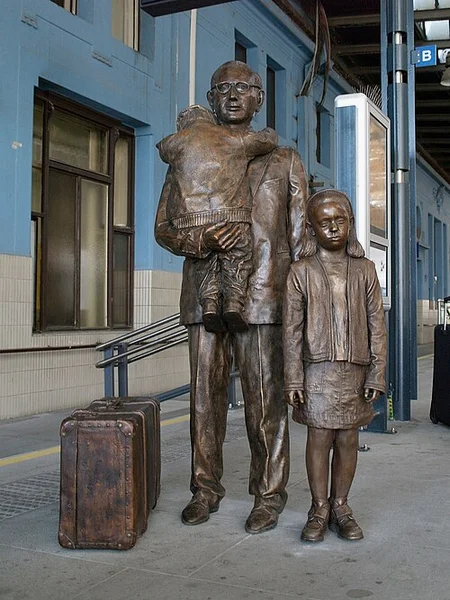
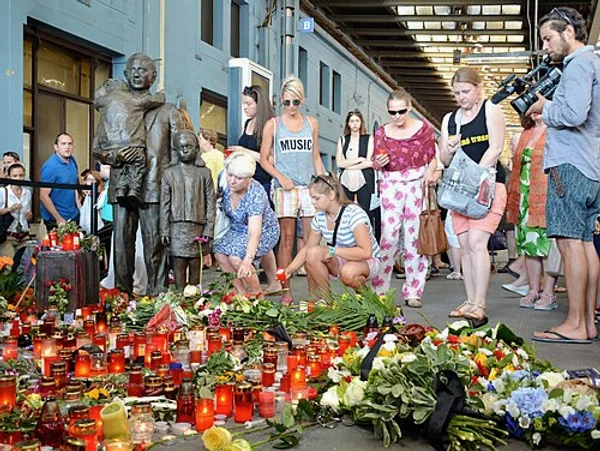
Today, the station in Prague bears a monument to Winton, and thousands of his "children" and their descendants are proof of the power of an act of kindness. Sir Nicholas Winton lived to be 106, seeing his contribution become a global inspiration, but he remained humble to the end, insisting that he had simply done his duty. His story remains an unclosed page because every one of the survivors is a bearer of a memory that must not fade.
The question that remains hanging in the air is how many more "Wintons" have remained undiscovered in the archives of history, whose deeds have been swallowed by oblivion? The case of Sir Nicholas Winton and the rescue trains is not just a historical fact, but a mirror in which each of us must look. The next time you pass by a station or see a train, think of those who waited on the platform, not knowing if they would board or stay behind. Are we capable of the same sacrifice, or have we become too comfortable in our world of safety?