
The Lost Expedition of Lieutenant Brusilov: The Arctic Ice Trap That Claimed Them All

AI Image - Copyright © Realniistorii.com
August 10, 1912. The Arctic sun barely grazes the horizon, casting long, blood-red shadows across the steel hull of the schooner Saint Anna. Lieutenant Georgy Brusilov stands on deck, staring into the white infinity, as a metallic grinding sound—like the cry of a dying animal—pierces the silence. The ice, ancient and unyielding, slowly wraps the ship in a lethal embrace, pinning it in place. In that moment, one of the darkest chapters in the history of polar exploration began, a story we revisit today through the archives of True Stories.
The air is so cold that every breath burns the lungs, and the radio, the only link to civilization, fails to transmit. Brusilov does not know that this is the last time the world hears from his crew. When, years later, scattered personal belongings and diaries were discovered on the icy islands, the truth about the lost expedition of Lieutenant Brusilov proved far more sinister than a simple navigational error. It was the beginning of a descent into the abyss of the human psyche, where hunger and betrayal became the only laws.
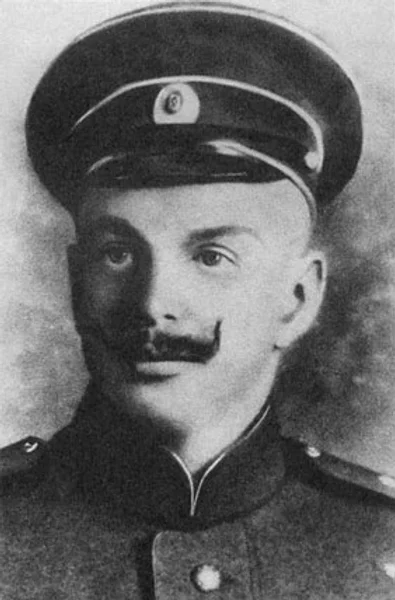
Chronicle of Events: When Ice Becomes a Prison
Brusilov's initial plan was ambitious: to traverse the Northern Sea Route, proving the superiority of Russian maritime prowess. The crew, composed of enthusiastic sailors and one woman—the physician Erminia Zhdanko—began the journey with hope, but the Kara Sea had other plans. In October 1912, the schooner was blocked by unusually thick ice that did not melt even the following year. The psychological state of the men began to crumble under the weight of the polar night as provisions dwindled critically.
The rift occurred in the spring of 1914, when navigator Valerian Albanov proposed a desperate plan: the crew would abandon the ship and trek on foot toward the Franz Josef Land archipelago. Brusilov refused to leave his vessel, believing the ice would eventually shift. Eight men remained on the Saint Anna, while Albanov and thirteen others set off into the unknown, pulling sleds with meager supplies. It was a separation that marked the end of unity and the beginning of a fight for survival at any cost.
During the trek across the ice fields, Albanov's crew faced insurmountable conditions that tested the limits of human endurance. Temperatures plummeted to minus 40 degrees, and ice hummocks rose like impassable walls before them. The men began to suffer from scurvy and hypothermia, and hunger-induced hallucinations became part of their daily lives. Each kilometer covered was paid for with a piece of their humanity, until finally, only two men managed to reach land, carrying with them only a fragment of the truth about Lieutenant Brusilov's lost expedition.
The Investigation and Hidden Clues in the Diaries
The only written evidence remaining from the tragedy are the diaries of Valerian Albanov, later discovered in the archives of the Russian State Museum of the Arctic and Antarctic. These records reveal shocking details about the internal tension that arose within the group after leaving the ship. Albanov describes how discipline collapsed and trust between the men was replaced by paranoia and suspicions of hidden rations. The documents show discrepancies between official reports and the actual state of the crew in their final days.
"We were not walking toward salvation; we were walking toward our own tomb, led by the ghost of a hope that betrayed us with every passing night. I realized we were doomed when I saw the eyes of my comrades—there was no life left in them, only an empty, animal hunger for survival." – excerpt from Albanov's diary.
Investigators who analyzed these texts years later discovered disturbing details that were never publicly discussed. There are reports of strange disappearances of provisions and attempts at hidden resistance against Albanov's orders. Physical evidence later found on Brusilov Island includes personal items scattered in a way that suggests a panicked flight or a sudden conflict. These clues call into question the official version of a heroic but failed rescue, pointing toward a much darker scenario.
Clash of Hypotheses: Official Version vs. The Unspoken
Official historiography long maintained the thesis that the expedition fell victim to harsh natural conditions without delving into the human factor. According to this version, a lack of navigational experience and poor planning led to the fatal end. However, declassified documents from the Soviet period reveal that there were serious doubts regarding Brusilov's mental health and his ability to command in critical situations. Some historians suggest there was a mutiny on board the Saint Anna that remained hidden from history.
The contradictions deepen when comparing the survivors' notes with the reports of rescue expeditions sent later. There are obvious gaps in the chronology—periods of several months for which there are no records or traces. Some researchers believe it is possible the crew encountered "something" that was not just ice and cold, but an event that necessitated complete silence. Alternative theories, though often dismissed by academic circles, find support in the inexplicable disappearance of the entire ship's hull, which has never been found.
Why does the official conclusion stubbornly ignore the possibility of an internal conflict with a fatal outcome? Perhaps because the truth about Lieutenant Brusilov's lost expedition would debunk the myth of the polar hero, turning him into a tragic example of the failure of the human psyche. The archives at the National Library of Russia still hold folders with previously unclassified testimonies. Every turn of these yellowed pages carries the feeling of touching a forgotten secret that someone wanted buried forever under the eternal ice.
Resolution: Traces in Time and the Unclosed Page
Valerian Albanov and the sailor Konrad were the only ones who managed to tell the story, but their accounts left more questions than answers. They returned to a changed world, marked by the impending First World War, and were often viewed with suspicion by their contemporaries. Albanov himself died later in the chaos of the Civil War, taking to his grave details that were never entered into official protocols. The story of the Saint Anna remains an unclosed page, one that has inspired literature but left reality in the shadows.
Today, more than a century later, technology allows us to scan the seabed, but the Arctic remains a jealous guardian of its secrets. The ship that Lieutenant Brusilov's lost expedition called home was likely crushed by the ice and scattered by currents into unknown depths. Every summer, when the ice cracks, researchers hope to find at least a fragment that might put an end to the speculation. But perhaps there are reasons why some stories should not be fully revealed—because sometimes the truth is colder than the Arctic Ocean itself.