The Last Flight of Che Guevara: The Day the Legend Was Captured
AI Image - Copyright © Realniistorii.com
The October morning of 1967 in the Yuro Ravine did not bring the usual chill of the Bolivian Andes, but rather a heavy, suffocating scent of gunpowder and damp earth. Ernesto Che Guevara, the former architect of the Cuban Revolution, pressed himself against the rocks as the net of government troops tightened with relentless precision. In this critical moment, as his radio transmitted only static, he realized that his last flight toward the dream of a continental revolution had been grounded forever. This was not merely a tactical defeat, but the final scene of a historical drama where every move had been tracked by unseen eyes, and faith in the ideology had been betrayed by his closest associates.
The air was thick with a tension that pierced the bones more sharply than the mountain wind. Che, dressed in a tattered uniform, held a broken carbine while shouts in Spanish with a sharp local accent echoed around him. This was the moment where myth met the reality of the battlefield, and history prepared to record the end of one of the 20th century's most controversial symbols. How did it come to this? Was it a coincidence, or a carefully planned operation designed to end the rebellion in South America? Readers of True Stories know that the truth is often stranger than fiction.
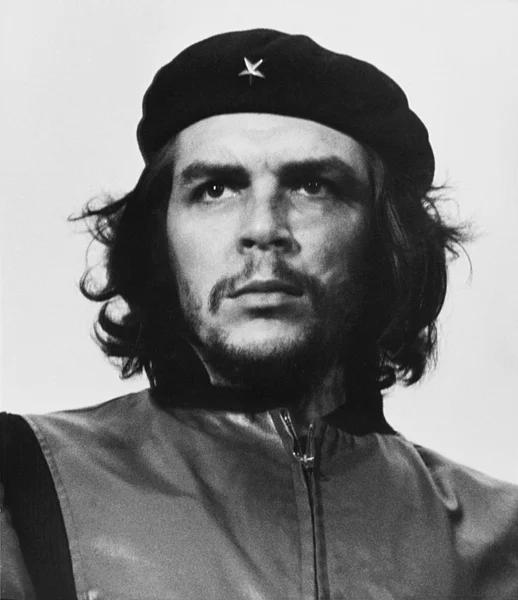
Chronicle of the Event: The Hour of Truth
On October 8, 1967, at 1:30 PM, Bolivian army reconnaissance patrols, supported by CIA intelligence, located the guerrilla group in the Yuro Ravine. Ernesto Che Guevara was exhausted, suffering from a severe form of asthma, and had lost contact with his other units. When the first shots tore through the silence, the guerrillas attempted to retreat toward the high-altitude regions, but the terrain proved to be a trap. Che tried to cover his men's retreat but was wounded in the leg, making every movement agonizing and impossible.
Sergeant Bernardino Huanca, who was part of the surrounding unit, later described the scene as chaotic and surreal. Che Guevara did not surrender immediately; he tried to use his last cartridges until his weapon jammed due to the accumulated dust and sand. At that moment, according to testimonies, he was pinned down by several soldiers who could not believe they had captured the leader of the guerrilla movement himself. His face was covered in a thick beard and mud, but his gaze remained sharp and piercing, even when he was brought to the ground.
His capture marked the end of a massive campaign that was supposed to ignite the continent but instead resulted in isolation. As they led him to the schoolhouse in La Higuera, Che did not utter a word, resigned to his fate. The soldiers, intimidated by the prisoner's aura, kept him under strict guard while senior officers consulted with Washington on their next moves. This was the moment when the last flight of Che Guevara moved from the battlefield to the political arena, where his fate had already been decided in distant offices.
The Investigation and Hidden Clues
An analysis of documents from that time reveals a series of strange discrepancies that cast a shadow over the official version of the capture. According to CIA archives, operational officers were in constant contact with the Bolivian command, providing real-time intelligence. However, many of the reports from the day of the capture are censored or missing, suggesting an attempt to conceal the direct involvement of foreign intelligence services in the liquidation of the guerrilla.
One of the most intriguing details lies in the reports of the Bolivian military, which mention an "unknown informant" who provided Che Guevara's exact position just hours before the attack. This person, whose identity remains shrouded in mystery, provided the key information that turned the last flight of Che Guevara into an inevitable finale. Physical evidence—Che's diary, found in his backpack, and his identification card—were seized immediately, but their contents were manipulated before being officially presented to the public.
"We did not know exactly who we had captured until he looked us in the eyes. There was no fear in his gaze, only a deep disappointment in human nature, which is capable of such betrayal." – from the testimony of a Bolivian army officer present at the interrogation in La Higuera 1.
The discrepancies in the timing of the capture and the subsequent transfer of Che to the school in La Higuera show that there were serious internal disputes regarding how to handle him. Some officers wanted to put him on trial, while others, under pressure from their superiors, sought a quick solution that would remove the "revolutionary risk" forever. These gaps in the protocols are the strongest argument for those who believe that the events of August 10, 1967, were orchestrated long before the first shot was fired.
Clash of Hypotheses: Official Version vs. The Unspoken
The official version of the Bolivian government states that Che Guevara died during a firefight while attempting to resist arrest. However, this thesis is in stark contradiction to the condition of the prisoner, who was wounded and completely incapacitated at the time of his capture. Historians such as Jon Lee Anderson 2 point out that declassified CIA documents clearly show there was a distinct instruction for him to be "neutralized" so he would not become a martyr during a public trial.
The counter-hypothesis, supported by many modern researchers, is that Che was betrayed by members of his own unit who had been bribed or intimidated by the Bolivian authorities. This scenario explains why the guerrillas were so easily discovered in the impenetrable jungle where they had been hiding for months. The connection between local villagers, who were pressured by the army, and the betrayal that led to the last flight of Che Guevara remains one of the darkest episodes in Latin American history.
Why does the official conclusion persistently ignore the role of foreign advisors in this process? The answer likely lies in the delicate balance of the Cold War, where every action was aimed at preventing a new Cuban Revolution. Documents that emerged decades later reveal that the Bolivian authorities acted as an instrument in the hands of much larger players who wanted to erase the traces of any potential influence Che might have had on the region.
Controversies also deepen regarding the lack of an official medical report on the state of the body after the capture. Everything was done in haste, within less than 24 hours, which is a typical hallmark of a cover-up. The lack of transparency during those hours has created fertile ground for legends that, even today, more than half a century later, continue to stir the imagination of historians.
Resolution, Traces in Time, and the Unclosed Page
Today, the school in La Higuera, where Che Guevara spent his final hours, has been turned into a museum that attracts thousands of visitors every year. The building bears the marks of time, and the walls, which witnessed one of the most significant political events of the century, radiate a strange, almost palpable silence. Local people often tell stories of the "spirit of Che" still wandering the mountains, reminding us of an era when ideology was stronger than fear.
The fate of those who participated in the capture was also marked by the events of August 10, 1967. Many of them lived in the shadows, haunted by the memory of that day, while others met their end under mysterious circumstances. The last flight of Che Guevara remains an unclosed page because questions about who exactly ordered the execution and what the role of each participant was continue to surface with new revelations.
Will history give us the final answers, or are some truths destined to remain buried under the mountain snows of Bolivia? The fact that new archives continue to appear to this day proves that the myth of Che is alive, and the search for truth is what makes us human. Perhaps, in the end, it is not important how he died, but why his image continues to be so dangerous to those in power even decades later.