
The Halifax Explosion: When the Sea Turned to Fire

AI Image - Copyright © Realniistorii.com
On the morning of December 6, 1917, the harbor of Halifax showed no signs of anything beyond the usual wartime bustle. A cold Atlantic wind whipped against the faces of the dockworkers, and the scent of salt mingled with the heavy smoke from the ships' coal furnaces. At 8:45 a.m., however, time effectively stood still. The collision between the Norwegian vessel Imo and the French ship Mont-Blanc—which was laden with tons of TNT, picric acid, and benzol—unleashed a force that seemed to rewrite the laws of physics. The Halifax Explosion was not merely an accident; it was an apocalyptic event that leveled the city and left behind questions that historians from the Secrets of the Past column have been trying to unravel for over a century.
The sound of the detonation was so powerful it was heard hundreds of kilometers away, and the shockwave swept through entire neighborhoods, turning wooden houses into splinters and dust. In this chaos, stories emerged of survivors who seemed protected by an invisible barrier. As the city turned into a fiery furnace, some individuals remained unscathed in buildings whose architecture should have collapsed under the pressure. How was this possible, and do the statistics of the tragedy hide data that official reports have persistently avoided commenting on? This is a story of human fragility in the face of a titanic force and the mysteries that survived even after the smoke cleared.
Chronicle of the Event: The Hour of Lost Time
It all began with a fatal navigation error in the narrow passage of the Narrows. The Mont-Blanc, transformed into a floating bomb, headed toward the exit of the bay, while the Imo moved in the opposite direction. Despite whistle signals, the distance between the two vessels closed at a fatal speed, causing a collision that initially appeared minor. The fire that broke out on the deck of the Mont-Blanc immediately turned into an uncontrollable inferno, drawing the attention of hundreds of passersby and sailors on the shore who watched the spectacle, unaware of the contents of the holds.
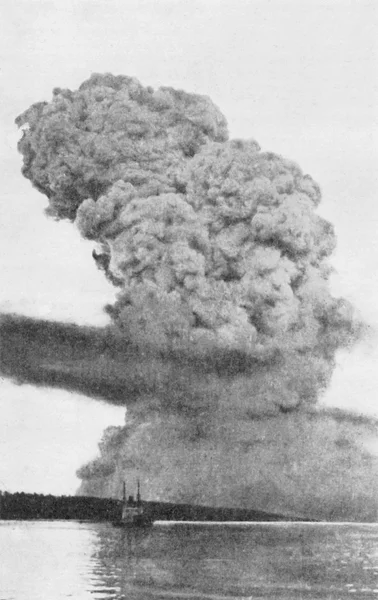
In those critical 20 minutes before the explosion, the city of Halifax lived in an illusion of safety. Firefighters rushed to the harbor, and children stopped on their way to school to watch the thick pillars of black smoke rising above the water. The psychological state of the people was a mixture of curiosity and indifference, fueled by the daily routine of the First World War. No one realized that in the center of the harbor lay the largest stockpile of explosives ever gathered for military needs, which was about to detonate with a power comparable to a small atomic bomb 1.
The Halifax Explosion tore through the fabric of reality at exactly 9:04 a.m. The pressure wave, traveling at supersonic speed, leveled buildings within a radius of several kilometers. People near windows were showered by thousands of sharp glass shards, leading to countless cases of temporary or permanent blindness. At that moment, the city ceased to exist in its familiar form and became a scene of unimaginable tragedy, where survival became a matter of pure luck or inexplicable architectural protection.
The Investigation and Hidden Clues
After the dust settled, authorities began a frantic investigation, attempting to find a scapegoat for what had happened. Records from the Maritime Museum of the Atlantic show that initial reports were full of contradictions regarding who exactly gave the wrong command. The captains of both ships were detained, but witness testimonies were so fragmented and conflicting that the court faced a paradox. Many survivors described sound and light effects that did not correspond to a standard TNT detonation, raising questions about possible chemical reactions that exceeded the expectations of experts at the time.
Among the archives, strange testimonies appeared regarding people who were in stone buildings with thick walls that remained almost intact, while wooden structures meters away were completely vaporized. One of the most disturbing accounts states the following:
"It was like a huge vacuum that sucked the air from our lungs before the shockwave even hit the walls. In our house, although all the windows were shattered, the interior walls remained stable, as if something invisible absorbed the energy of the blast and redirected it around us, rather than through us."
This phenomenon, often mentioned in survivors' diaries, remains without a satisfactory explanation in official investigations. Investigative bodies, under pressure from the Ministry of War, quickly closed the case, declaring it an "accident due to human negligence." Any deviation from this thesis, including questions about the unusual structural anomalies of the buildings, was systematically ignored or classified as "irrelevant to the judicial process."
Clash of Hypotheses: Official Version vs. The Unspoken
The official version of the Halifax Explosion conveniently ignores the fact that the Mont-Blanc's cargo was unusually large even for the military standards of 1917. Historians often point out that the harbor was a critical logistics point for the Entente, making any investigation into the incident potentially dangerous to the reputation of the military command. Did an attempt to cover up the negligent storage of dangerous materials in close proximity to densely populated areas lie behind the facade of "human error"? This is a question that continues to intrigue researchers working with documents from the Canadian War Museum 2.
Alternative theories, supported by some historians, suggest that the explosion was amplified by specific weather conditions on the morning of December 6. Low atmospheric pressure and high humidity may have acted as a catalyst for the propagation of the shockwave in an unexpected way. These hypotheses, however, are often dismissed by academic circles that prefer a conservative approach. The contradiction between the physical evidence of "strange survival" and the dry statistics of the death toll creates a gap in which legends are born about the city that should have been wiped off the map but survived by a miracle.
The suppression of certain facts surrounding the Halifax Explosion is a historical fact that is difficult to deny. Documents declassified as late as the 1990s reveal that the military was aware of the risks of transporting such dangerous cargo through the harbor but chose not to change their protocols. This makes the tragedy not just an accident, but the result of systemic irresponsibility that was carefully hidden from the public eye in the name of "military necessity." Every new revelation only adds weight to the suspicion that the true scale of the event was never fully disclosed to the world.
Resolution, Traces in Time, and the Unclosed Page
Decades after 1917, Halifax has been completely rebuilt, but the memory of the catastrophe is embedded in the very architecture of the city. Some of the buildings that survived by a "miracle" today serve as silent witnesses to the event, and local residents still tell stories of their ancestors who were saved thanks to inexplicable coincidences. These survivors, often called the "people from the zone of silence," remain a living link to the past that does not fit into any history textbook.
Today, the site where the Halifax Explosion occurred has been developed, but the atmosphere there remains heavy and saturated with history. Visitors to the harbor often share that they feel an inexplicable anxiety when looking at the waters of the bay, knowing what was hidden beneath the surface on that fateful December day. The mystery of the explosion is not just in the number of victims, but in the way the city managed to revive itself while bearing the scars of one of the greatest catastrophes before the atomic age.
Were these architectural anomalies the result of pure luck, or is there a physical law hidden within them that science has yet to define? Perhaps the answer lies somewhere in the archives that are still waiting for their turn to be analyzed. Until then, the Halifax Explosion remains one of the darkest and most compelling pages in world history, reminding us how thin the line is between civilization and total destruction.