
The Legend of the 'Gold Train' of Wałbrzych: Where Is the Treasure?

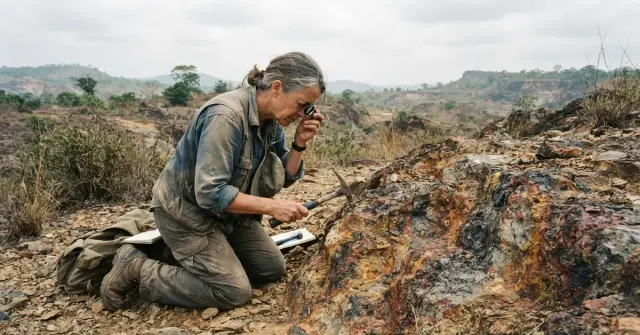
AI Image - Copyright © Realniistorii.com
January 1945. The cold in Lower Silesia is so biting that the iron rails near Wałbrzych seem to crack under the weight of the retreating, defeated Wehrmacht. In this chaos of the crumbling Third Reich, one of the greatest legends of modern history was born: The Mystery of the 'Gold Train' of Wałbrzych. For decades, locals and treasure hunters from around the world have passed down the legend. They speak of an armored train carrying tons of gold, precious jewels, and looted works of art. According to the legend, it is hidden somewhere deep within the mountains, having entered a secret tunnel whose entrance was blown shut forever. This is not merely a fairy tale for treasure seekers, but a complex series of historical facts intertwined with urban folklore that continues to draw the attention of researchers and enthusiasts of Conspiracies to this day.
The air in the Wałbrzych region is thick with the scent of damp earth and old secrets—a fitting precursor to how the legend of the train would take on almost mythical proportions. In 2015, the world once again turned its gaze toward these Polish mountains. Two men announced they had located the 'gold train' using ground-penetrating radar. Their claims caused such a stir that Polish authorities were forced to mobilize an army of experts to verify whether a treasure truly lay beneath the earth or if we were witnessing yet another massive sensation. It is time to separate fact from fiction and look to the archives to understand what actually happened at the end of World War II.
Chronicle of Events and the Genesis of the Myth
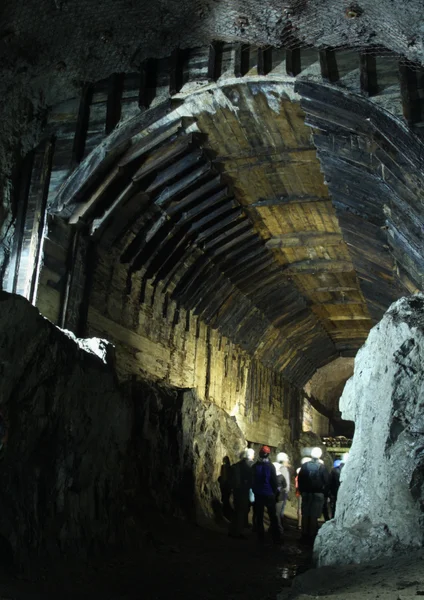
In 1945, the Nazis began a massive evacuation (often described as theft) of valuables from Breslau (modern-day Wrocław, Poland) due to the advancing Red Army. Project Riese, a network of tunnels and underground facilities in the Owl Mountains, became the focal point for theories and speculation regarding hidden trains. Historical data confirms that the Nazis did indeed transport vast quantities of valuables and equipment. However, there is not a single verified document proving the existence of a specific train loaded with gold that vanished into a tunnel near Wałbrzych. This very absence of documentation fuels the belief that something is hidden. The legend thrives precisely because there is no complete record of what happened to the trains that left the region in the final days of the war.
The psychological state of the local population at the end of the war was marked by fear and uncertainty—an ideal environment for myths and legends to take root. People saw trains loaded with everything from machinery to personal belongings. In their minds, these images merged into a singular vision of stolen treasures. Is the Nazi 'gold train' merely an illusion? It is important to note that the Polish Ministry of Culture and National Heritage has repeatedly emphasized the lack of evidence for the existence of such an object. Nevertheless, eyewitness accounts, often passed down through generations, have become 'truth'—a truth that is difficult to refute even by the most skilled historians and their proven scientific methods.
Investigating these claims requires a cool head and careful verification of every detail, as any error can lead to false conclusions and new misconceptions. Historians from the Lower Silesian Historical Society point out that much of the 'evidence' provided by treasure hunters is based on their own interpretations of old maps. It is argued that these maps have nothing to do with the actual railway infrastructure of 1945. Trains at that time were subject to strict accounting and monitoring. The loss of an entire train composition would have left more than one trace in the logistics logs of the German railways. To date, no such logs have been found.
The Investigation and Hidden Clues
When claims that the train had been discovered emerged in 2015, Polish state institutions approached the matter with the necessary seriousness, despite significant skepticism. Teams of geologists and researchers from the AGH University of Science and Technology in Kraków conducted large-scale surveys using magnetic and gravimetric methods. The results were categorical: no anomalies were found to suggest the presence of a metal object the size of a train buried in the rock. All hopes for a quick discovery of the treasure vanished. The scientific facts were definitive, though they left behind much disappointment and new questions.
Official reports from Polish authorities clearly state that the surveys found no traces of tunnels or railway lines as described in the legend. While tunnels from Project Riese do exist, none lead to a gold train. One of the lead researchers on the case noted in a report:
“Despite intensive geophysical measurements, no evidence was established for the existence of an underground train. All anomalies registered by private individuals turned out to be natural geological formations or the result of misinterpreted data.”This quote from an official report effectively ended speculation about 'hidden gold' in the eyes of the academic community.
The strange discrepancies in the testimonies of those who claim to have seen the train also have an explanation. They are most often based on the memories of relatives who were children in 1945. A child's imagination, combined with the horrors of war, transformed ordinary freight trains into mysterious treasures. As these stories are passed down by word of mouth over decades, they acquire more and more details that make them appear authentic, even though they were added later. This is a textbook example of how a story can evolve, becoming part of a region's cultural and historical heritage—a historical game of 'telephone'.
Clash of Hypotheses: Official Version vs. The Unspoken
Why, then, does the Mystery of the 'Gold Train' of Wałbrzych continue to be so compelling? The answer lies in the human need for legends, myths, and fairy tales in a world that is becoming increasingly uncertain, unpredictable, and frightening. The official version—that the train is a myth—does not satisfy those who want to believe in the story of mountains of gold left behind by the Nazis. They often argue that archives have been intentionally censored or that the relevant documents are classified in the archives of the USA or modern-day Russia. This is one of the most popular arguments used to keep a conspiracy theory alive.
When we analyze the contradictions, we see that even if a train full of valuables had existed, it was most likely destroyed by military action, or at the very least, unloaded and the valuables moved elsewhere rather than being left in the depths of a mountain. The logistics of Nazi Germany were oriented toward survival; they did not involve hiding treasures for the future or wasting time digging tunnels, as it was highly likely they would be discovered by the advancing Allied forces.
Despite all this, there are indeed documents proving that the Nazis carried valuables from private collections and museums in the Lower Silesian region. This is the historical fact that provides the spark for the search for the gold train to continue, even if it does not prove the train itself exists. There is a significant difference between 'moving valuable items' and 'a train full of gold'. In the public consciousness, the two concepts are often conflated. The legend lives on, fueled by fragments of real facts used to build something that does not exist.
Resolution, Traces in Time, and the Unclosed Page
Today, Wałbrzych is a city trying to live with this legend. Local authorities have invested in tourism and use the story of the train as a promotional tool, without claiming it as proven truth. This is a pragmatic approach that allows the city to benefit from tourist interest without committing to unverified claims. Ultimately, the Mystery of the 'Gold Train' of Wałbrzych has become part of the region's identity, regardless of the fact that there is no gold.
The case will remain an open book, not because there is new evidence, but because people will always need these stories. Every new study, every new newspaper article—even if intended to debunk the lie—only adds another layer to the myth. It is a story about how the human desire for a miracle can be stronger than historical facts, turning one of many logistics operations from World War II into a legend that will continue to fascinate humanity for many years to come.