
The Chicago Trap: The Great Fire of 1871 – Divine Judgment or Human Error?

AI Image - Copyright © Realniistorii.com
It is 9:00 PM on October 8, 1871. The air over Chicago is unusually dry, electrified by a summer heat that refuses to fade despite the arrival of autumn. Suddenly, the silence of the Sunday evening is shattered not by the tolling of bells, but by an ominous, low-frequency rumble that seems to rise from the very bowels of the earth. On the outskirts of the city, in Catherine O'Leary's barn, a single spark transforms into a monster, turning wooden structures into tinderboxes within minutes. This is not merely a fire; it is an apocalypse that rewrites the history of one of the world's most dynamic metropolises.
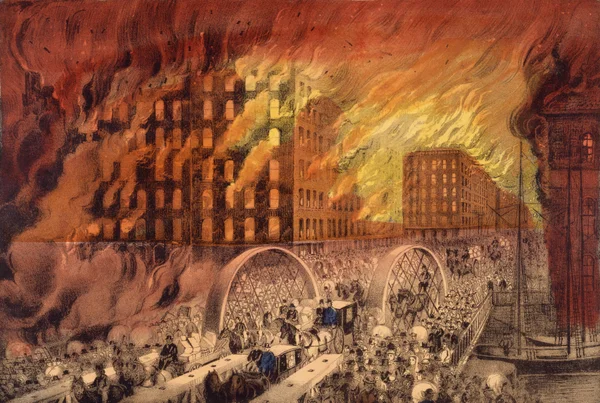
Today, as we examine the archives of Mysteries, we are confronted with the question of whether this Chicago Trap was simply a series of unfortunate circumstances or a carefully planned catastrophe. As flames consume the streets, entire neighborhoods vanish under ash in a matter of hours, and thousands of people rush toward the waters of Lake Michigan, seeking salvation from the fiery element. The air is thick with the scent of charred wood, molten glass, and despair as the city turns into a literal hell, its flames visible from miles away.
Chronicle of a Fiery Night
The first reports of the fire were ignored by the on-duty firefighters, who were already completely exhausted from previous incidents earlier that week. By the time they finally arrived at the scene, the fire had already jumped several streets, fueled by a strong southwest wind that acted like a giant bellows for a forge. People, awakened by screams and the crackling of burning beams, poured into the streets in their pajamas, carrying only their most precious belongings. Panic was absolute, and the narrow wooden sidewalks became traps, burning beneath the feet of fleeing citizens.
In the center of the chaos, the police lost all control as the courthouse and city hall turned into massive torches, their roofs collapsing with a deafening crash. Witnesses described how entire blocks spontaneously ignited, as if they had been soaked in kerosene, which sparked the first suspicions of outside interference. Architects and engineers who later examined the ruins were puzzled by the extent of the destruction, which did not correspond to a typical fire in a wooden building. The heat was so intense that stone cracked and iron bent like wax, turning the city into a graveyard of molten metal.
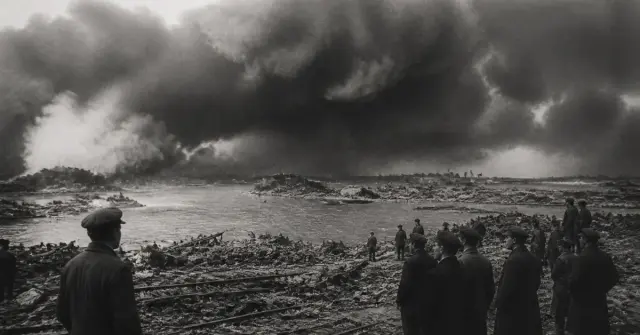
By midnight, the fire had become uncontrollable, turning the sky into a blood-red canvas that illuminated Lake Michigan. People threw themselves into the icy waters, hoping they would save them from the wave of hot air sweeping everything in its path. The city, known as a symbol of progress and industrial leaps, was now just a wasteland where only the screams of animals and the moans of the wounded could be heard. No one could stop this Chicago Trap, which seemed to feed on the very energy of the city, consuming everything living and non-living on its way to total annihilation.
The Investigation and Hidden Clues
The official investigation, which began immediately after the fire was extinguished, quickly focused its attention on Mrs. O'Leary and her ill-fated cow. This version, however, while convenient for the authorities, has been subjected to serious criticism by independent researchers who have found gaps in the archives of the Chicago History Museum1. Reports indicate that at the site of the initial ignition, there were strange traces of chemical substances that should not have been present in a rural barn. Some witnesses even claimed to have seen figures running in the darkness just before the flames broke out, but their testimonies were suppressed by the police.
In the investigation records, phrases appear that sound more like a cover-up than a search for the truth. One survivor wrote in his diary:
"The fire did not move like an ordinary blaze; it spread with unnatural speed, jumping from building to building as if some invisible hand were directing the flames toward the most important objects in the city."
This quote, found in the archives of the Library of Congress2, casts a serious shadow over the official version regarding O'Leary's cow. The physical evidence—molten metal objects that would require temperatures far higher than typical wood combustion—remains inexplicable to modern experts.
Discrepancies in the firefighters' testimonies also raise suspicion, as they claimed to have been sent to the wrong address during the first critical minutes. This delay proved fatal and allowed the fire to grow to proportions that no one could stop. Was this a display of incompetence or deliberate sabotage aimed at making the Chicago Trap a reality? The questions remain unanswered as historians continue to sift through old files in search of the truth, which was buried under thousands of tons of debris.
Clash of Hypotheses: Official Version vs. The Unspoken
Alternative theories regarding the origin of the fire even include the hypothesis of meteor showers, which some researchers believe passed over the region that same night. Although extravagant, this theory attempts to explain the unusual intensity of the fire and the speed at which it spread. Official history, however, stubbornly refuses to accept any external factors, sticking to the version of human negligence, which is far easier for the public to control and understand.
The contradictions deepen when we examine urban planning maps from just before the fire, which called for a massive redesign of Chicago. Some critics suggest that the fire was the only way to quickly clear land to realize new, ambitious projects. This Chicago Trap, according to them, was not an accident but a brutal form of "urban renewal" that sacrificed thousands of human lives in the name of economic progress and modern architecture.
Documents declassified decades later reveal that local politicians knew about the danger of such an incident but took no measures to improve fire safety. Instead, they invested in projects that benefited wealthy investors, ignoring the needs of the poor neighborhoods where the fire began. This gap between the interests of those in power and the safety of the citizens created one of the darkest pages in American history, which continues to spark heated debates to this day.
Resolution, Traces in Time, and the Unclosed Page
Years after the catastrophe, Chicago rose from the ashes like a phoenix, becoming the cradle of modern architecture and the skyscraper. The survivors, however, never forgot the night their city was consumed by the elements, and they often told stories of strange lights and sounds that accompanied the fire. This memory is embedded in the foundations of every new building, reminding residents that beneath the shiny facade of the modern city lies an unclosed narrative of loss and mystery.
Whether the Chicago Trap was divine judgment or a carefully planned human error remains one of the questions that continue to stir the mind. Today, walking through the streets, one can feel the weight of the past, which seems to still pulse beneath the asphalt. With every new discovery in the archives, we get closer to the truth, but are we ready to accept it when it is so terrifying? Perhaps some secrets should remain buried in the ashes so that history, which no one wants to experience again, does not repeat itself.