

The Mystery of the 'Vampire Stars': Blue Stragglers

AI Image - Copyright © Realniistorii.com
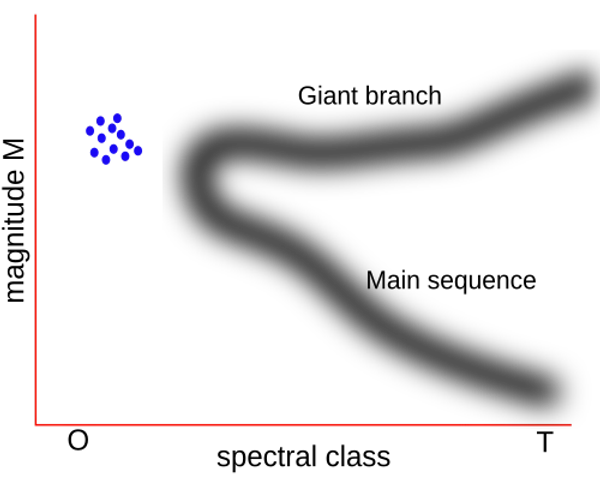
It was 2:14 AM in November 1953 when the silence at the Mount Palomar Observatory was shattered not by a sound, but by the sudden realization of the impossible. Astronomer Allan Sandage, eyes fixed on the photographic plates of the globular cluster M3, felt the mountain chill pierce his jacket as he compared the frames against theoretical models of evolution. Every star in this ancient cluster should have long since transitioned into the red giant phase, fading slowly into predictable old age. Instead, bright, hot, blue objects pulsed before him, appearing absurdly young, as if time had stopped or turned in their favor.
This was not merely a scientific anomaly; it was a direct challenge to the fundamental laws of physics that Sandage and his colleagues were attempting to map. These strange celestial bodies, later dubbed blue stragglers, appeared like ghosts in a machine room where everything should have long since ceased to function. How could a star remain young when its entire life cycle dictates inevitable aging? The question hung in the air, sparking decades of debate in the field of Space and Science, which revealed a dark and predatory truth about life among the stars.
A Chronicle of Stellar Crime
In 1953, the astronomical community was in a state of shock, struggling to reconcile data that contradicted the dogma of stellar evolution. Sandage was not alone in his confusion; the entire team at Palomar worked around the clock, re-checking measurements of spectral classes again and again. They searched for equipment errors, defects in the photographic emulsion, or even simple human negligence in record-keeping. Psychological tension mounted as each new night of observation confirmed the presence of these anomalously bright objects at the heart of ancient clusters. The scientists felt as though they had discovered evidence of biological immortality in a world that knows only decay.
Working in near-freezing temperatures, Sandage's team spent hours in the darkroom analyzing the gradations of blue on the plates. They knew that if these stars were truly as young as they appeared, they should have been born billions of years after the cluster itself, which was statistically impossible. No one dared to utter the word "vampirism" aloud, but notes regarding unusual density in the centers of the clusters appeared with increasing frequency in their logs. The atmosphere in the observatory was electrified by a combination of intellectual intoxication and the fear of the unknown that only true discoverers know.
Reports from that era describe a methodical search of every cubic parsec of space to rule out the possibility of light interference. Each astronomer acted like an investigative detective, searching for traces of a "crime" that had occurred eons ago. When Sandage finally published his findings, he did not provide answers; he set traps for the minds of future generations. This was the moment when blue stragglers transformed from a statistical error into a central enigma of modern astrophysics.
The Investigation and Hidden Clues
For decades, the evidence remained buried in dusty observatory archives until the development of computer technology and the advent of the Hubble Space Telescope allowed for a detailed examination of the cores of globular clusters. Investigating scientists began to notice that these stars were not "eternal," but were actually the result of violent mergers or the theft of matter. They discovered that blue stragglers are found in regions with extremely high stellar concentrations, where gravitational interactions are a daily occurrence. This revealed a picture of cosmic collisions in which a larger star literally "sucks" hydrogen fuel from its neighbor, rejuvenating itself at the expense of its victim 1.
Hubble observation protocols confirm these suspicions, showing that these objects often have an unusual chemical composition that does not match their neighbors. One of the leading theories, presented in the Astrophysical Journal, states the following:
"Blue stragglers are not just an anomaly; they are the product of stellar cannibalism, in which a more massive star extends its life by acquiring additional mass from a partner in a binary system or through direct merger during a close encounter." 2
This quote, taken from a detailed report, puts an end to the romantic notion of stellar evolution as a clean and predictable process. Scientists began to understand that the law of the jungle prevails in dense star clusters, where the survival of the brightest is linked to the consumption of the weaker. The discrepancies in the readings from the old 1953 plates no longer seemed like errors, but rather the first clues to a massive cosmic drama.
Clash of Hypotheses: Official Version vs. The Unspoken
For a long time, official science attempted to downplay the "vampirism" hypothesis, preferring more conservative models of evolution. Critics argued that blue stragglers were simply the result of statistical fluctuations in the distribution of stellar masses. They refused to acknowledge that objects exist in space that disrupt the established order through violence and resource theft. This resistance to the "vampire" theory was fueled by a desire to maintain the ideal of the cosmos as an orderly and predictable machine, rather than a chaotic battlefield.
However, data declassified over the years shows that as early as the 1950s, there were scientists who suspected the true nature of these objects. They were, however, forced to keep their hypotheses quiet to avoid ridicule from the academic elite. The clash between the official version and the real data resembles a detective novel in which the truth was before everyone's eyes, but no one wanted to see it. The unspoken facts about the dynamics of star clusters today appear as a critical gap in the history of astrophysics.
When we look at this data today, it becomes clear why the official conclusion of 1953 sounded so unconvincing to critical minds. The lack of definitive evidence at the time was used as a shield by those who feared radical changes in the understanding of the universe. Over time, however, the evidence for the violent nature of blue stragglers became so numerous that official science was forced to capitulate and acknowledge the existence of this mechanism for "stellar rejuvenation."
Resolution, Traces in Time, and the Unclosed Page
Today, the Mount Palomar Observatory continues to stand as a monument to that time when scientists touched the boundaries of the possible. Many of the participants in Sandage's team are no longer with us, but their notes remain as a testament to one of the greatest mysteries of the 20th century. A strange coincidence is that even with modern telescopes, we are still discovering new blue stragglers in clusters we thought were fully explored. This is an unclosed page in the history of physics, reminding us that the cosmos will always hide its secrets.
Every night, when we look at the sky, we observe the light of these "vampires" that fed on the life of other stars billions of years ago. They are not immortal; they have simply extended their existence through an act of cosmic greed. Is a new "vampire" being born right now in the depths of some other cluster, one that will mislead future astronomers? This remains the question that sends a shiver down the spine of every investigative journalist and historian of science as they gaze at the stars.