The Philadelphia Experiment: The Ship, the Archives, and the Legend of Invisibility

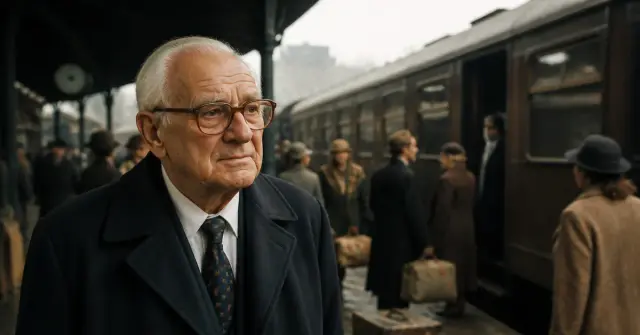
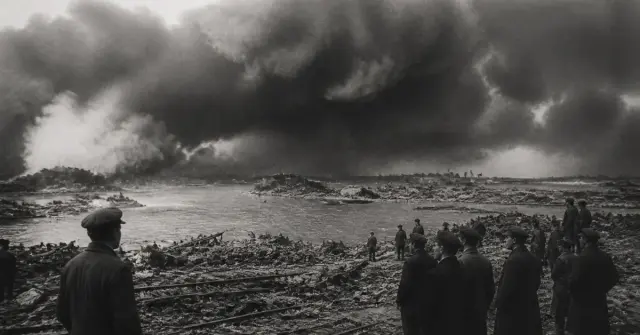
Illustrative reconstruction for the article.
A ship vanishes from a harbor, reappears elsewhere, and leaves behind tales of impossible technology. This is how the legend of the Philadelphia Experiment typically begins. It is a description of a popular claim, not an established historical event. At its center is the American destroyer escort USS Eldridge and an alleged experiment from 1943.1
To verify such a story, it is not enough to ask if it sounds plausible. First, we must find its earliest versions, organize the dates, and determine if the ship was even in the location the narrative attributes to it.
The Route Instead of the Mystical Fog
The Naval History and Heritage Command provides a chronology of the Eldridge following its commissioning in August 1943. This record includes New York, a shakedown period around the Bermuda Islands, and subsequent movement to Norfolk. The archival record does not support the ship's presence in Philadelphia for the legendary experiment.1
Such a document does not answer every philosophical question about secret projects. It does, however, answer a much more specific question about a particular ship and a specific timeline. That specificity is its value.
If a version contradicts the ship's route, there are two possibilities: present stronger documentation or revise the claim. Declaring all inconvenient records as part of a cover-up is not new evidence; it merely moves the story beyond the reach of verification.
Degaussing Is Not Optical Invisibility
Real naval technology exists near the legend: degaussing. Its purpose is to reduce a ship's magnetic signature and its vulnerability to specific magnetic mines. This does not mean making the hull invisible to the human eye.1
The transition between the two ideas is easy in popular storytelling. "Harder to detect" becomes "invisible," and then "vanished." But each of these claims describes a different effect and requires different evidence.
This is precisely where technical detail proves more important than atmosphere. If we change the nature of the detection without stating so, we can manufacture a miracle simply through inaccurate retelling. The real existence of wartime secrecy does not make every story added to it real.
Letters, a Book, and Interest Turned into Confirmation
An information sheet from the Office of Naval Research tracks the spread of the narrative through letters sent to author Morris Jessup after the publication of his book on UFOs in 1955. Subsequently, an annotated copy attracted the interest of two officials. Its limited reproduction at their initiative became part of the mythology surrounding the case.2
The important distinction lies between interest in a claim and its confirmation. The fact that someone in an institution read or reprinted unusual material does not turn the content into an official report of an experiment conducted.
The same problem arises with temporal distance. A letter written years after an alleged event must be evaluated as such. It does not automatically acquire the qualities of a logbook created on-site on the same day. In historical reading, the origin of the narrative is part of the evidence, not a minor bibliographic detail.
What Remains After Verification
In the sources reviewed, there is no reliable basis for the legend of the disappearance and relocation of the Eldridge to be presented as an established experiment. There is a real ship, real technology, and a traceable history of later claims. Mixing them creates a compelling atmosphere, but not a compelling documentary connection.
This is why this text is placed in Conspiracies: a section for verifying claims, not for validating them by default. In Mysteries, there are cases with truly incomplete trails. The difference is important—a missing answer and an unsupported sensationalist answer are not the same thing.
Sources
- The Philadelphia Experiment — U.S. Naval History and Heritage Command
- Philadelphia Experiment — ONR Information Sheet — Office of Naval Research / NHHC