
The Tragedy of Flight 455: Terrorist Act or CIA Conspiracy?
AI Image - Copyright © Realniistorii.com
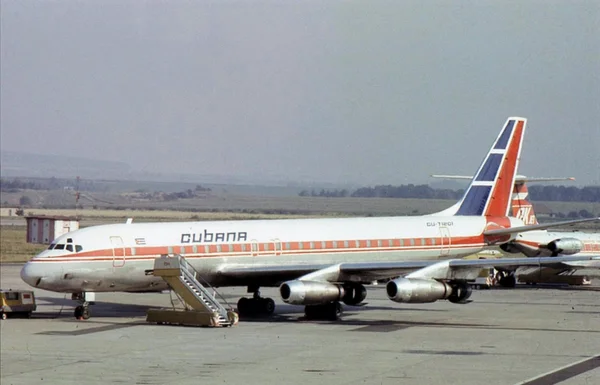
October 6, 1976. The sky over Barbados was unusually calm when, at 1:24 PM local time, the pilot of Cubana Flight 455 transmitted his final, desperate message to the control tower. Chaos erupted in the cockpit of the Douglas DC-8; the sound of tearing metal dominated the roar of the engines, and the air filled with the sharp, suffocating scent of jet fuel and explosives. Only seconds earlier, the passengers had been enjoying a peaceful flight from Barbados to Havana, unaware that they had become pawns in a deadly geopolitical game. This marked the beginning of one of the darkest chapters in aviation history, where the truth remains blurred between official reports and the shadows of intelligence agencies.
The world was shocked by the news of the plane crash, which claimed the lives of all 73 people on board, including the Cuban national youth fencing team. As the victims' bodies sank into the depths of the Caribbean Sea, questions began to mount with relentless speed: how did a bomb end up on a civilian flight, and who was behind this cold-blooded act? The tragedy of Flight 455 was not merely an accident, but a brutal reminder of how fragile peace was during the Cold War. Today, decades later, we return to this case in our Conspiracies section to unravel whether this was state-sponsored terrorism or a false-flag operation orchestrated by shadowy figures.
Chronicle of the Disaster: The Minutes Before Hell
Flight 455 took off from Seawell Airport in Barbados at 11:24 AM, heading for Kingston, Jamaica, and then on to Havana. Just nine minutes after takeoff, at an altitude of 18,000 feet, the first device detonated in the rear of the cabin, followed instantly by a second. Captain Wilfredo Pérez immediately reported a fire on board and an urgent need to land, desperately trying to control the aircraft as it lost hydraulic power. All passengers, including athletes, students, and diplomats, fell into a panic as the plane began an uncontrollable descent toward the ocean.
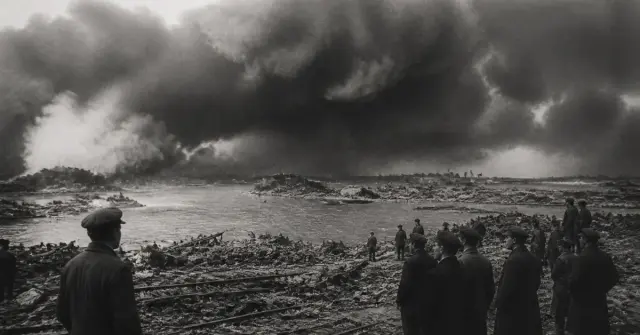
Witnesses on the shore watched as the giant metal bird made a sharp turn, as if the pilot were trying to steer it back to the runway, but the structure was already critically compromised. The sound of the explosions was heard by local residents, who described a scene of unimaginable horror as the plane crashed into the sea just a few kilometers from the coast. Rescue teams arriving at the scene found only debris and fuel slicks scattered on the surface, leaving no chance of survival for any of the passengers. All 73 people, including 57 Cubans, 11 Guyanese, and 5 North Koreans, died on impact, leaving behind only unanswered questions.
The investigation later determined that the explosive devices had been planted by two Venezuelan citizens, Hernán Ricardo and Freddy Lugo, who disembarked from the plane in Barbados before it continued to Havana. These men were linked to anti-Castro groups based in Venezuela that had direct support from influential figures in the region's intelligence circles. This chronicle of events reveals not just a terrorist act, but a carefully planned operation aimed at paralyzing the Cuban government and sowing fear in the heart of the Caribbean. The tragedy of Flight 455 remains forever marked by the cruelty of its perpetrators and the silence of those who instructed them.
The Investigation and Hidden Clues
The investigation began almost immediately, with authorities from Barbados, Trinidad, and Cuba joining forces to trace the path of the attackers back to Caracas. It quickly became clear that Ricardo and Lugo were merely the executors, while the true architects of the plot were Luis Posada Carriles and Orlando Bosch, figures with deep ties to anti-communist circles. Evidence collected from the plane's wreckage confirmed the use of C-4 explosive, the origin of which was traced to military supplies often used in covert operations in Latin America. However, the case documentation is shrouded in mystery, with many key witnesses disappearing or suddenly changing their testimonies under pressure.
Official investigation protocols often omitted the connection between the perpetrators and their handlers, focusing solely on the technical aspects of the explosion. One of the most disturbing documents in the archives is a report revealing that intelligence services had been warned of a possible attack against Cuban aircraft weeks before the event. As noted in a declassified document from 1:
"There are multiple indications that anti-Castro elements are planning sabotage actions against Cuban civil aviation, using Venezuelan territory as a base for logistical preparation and recruitment."
This revelation casts serious doubt on claims that authorities had no idea of the impending danger. The lack of preventive measures in the presence of such specific intelligence is a massive red flag that fuels the theory of complicity, or at least intentional "looking the other way." Every clue, from the perpetrators' passports to their flights, leads to a network of people who enjoyed the protection of powerful state structures, making a full investigation of the Flight 455 tragedy practically impossible in those years.
Clash of Hypotheses: Official Version vs. The Unspoken
The official version of Flight 455 states that it was an isolated act of terrorism committed by fanatical individuals who acted alone in the name of their political ideals. However, this version cracks under the weight of the facts when considering the context of the Cold War and the CIA's role in destabilizing regimes in the region. Many historians point out that Luis Posada Carriles was a long-time collaborator with American intelligence, which raises the question: did the CIA know about the operation and allow it to happen to weaken Fidel Castro's influence?
An analysis of the contradictions reveals that much of the evidence that could have implicated higher levels of the hierarchy was destroyed or classified under the pretext of "national security." While the Cuban government has insisted on justice and the disclosure of the truth, Western media often presents the case as a clash between ideological opponents without delving into the depth of the conspiracy. This discrepancy between the official conclusion and the reality on the ground is typical of operations of such scale, where the goal is to achieve strategic success without leaving visible fingerprints on government institutions.
Alternative hypotheses are not merely the product of imagination but are based on declassified documents that link the perpetrators to the "Operation Condor" network. This network was a coordinated campaign to eliminate political opponents in South America, often with the tacit approval or direct logistical support of Washington. The tragedy of Flight 455 fits perfectly into this model of violence, where civilian lives are sacrificed for a higher goal—the victory over communism. The question of whether this was terrorism or a state-inspired act remains open, but the evidence of complicity in the shadows is too great to be ignored by objective researchers.
Resolution, Traces in Time, and the Unclosed Page
Years after the crash, the site off the coast of Barbados remains quiet, but the memory of the 73 victims continues to weigh like lead in the Cuban memory. The perpetrators of the attack spent decades fleeing justice or enjoying protection in countries that refused extradition, turning the legal process into a farce. The tragedy of Flight 455 is not just a closed chapter of the past, but an open wound that reminds us of the cynicism of an era in which human life was a bargaining chip in geopolitical poker.
Today, as we examine the archives, we wonder if we will ever learn the full truth about who gave the final order to blow up the plane. Do the documents that still remain under the "top secret" stamp hold the answer that would change the history of the Cold War? The fact that so many questions remain unanswered is the most terrifying legacy of that day. Perhaps the truth is buried somewhere in the National Security archives, waiting for a moment when the world will be ready to face the face of such an uncomfortable reality.