
The Emu War of 1932: When the Australian Army Faced an Unexpected Foe

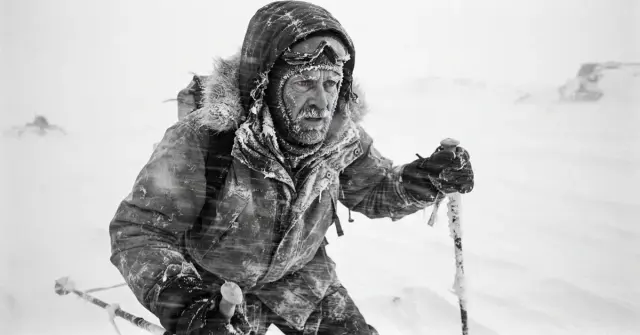
AI Image - Copyright © Realniistorii.com
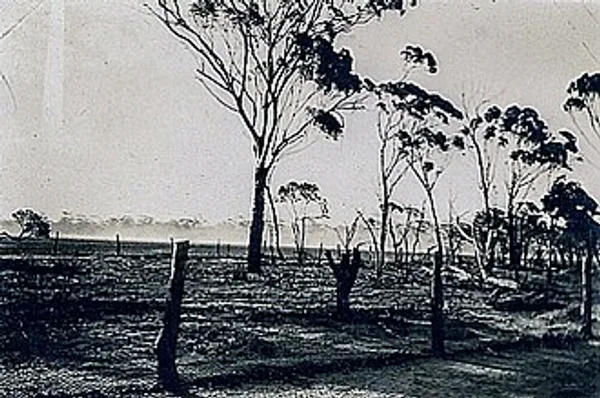
November 1932. Western Australia is gripped by a drought that has turned farmland into dusty plains. In this surreal landscape, under the scorching sun, an unexpected sound breaks the silence—not the rumble of artillery, but the heavy thud of thousands of footsteps approaching the crops. The Emu War of 1932 is not a product of imagination, but a historical fact that continues to baffle military strategists and historians worldwide. In the depths of the Great Depression, World War I veterans turned farmers found themselves facing an enemy that knew no fear and recognized no military logic.
It all began with the arrival of 20,000 emus migrating toward the fertile lands of the Campion district. The birds, standing nearly two meters tall, began systematically destroying fences and devouring wheat crops, leaving only ruin in their wake. The government, pressured by desperate farmers, made an unprecedented decision: to deploy the regular army to defend the territory. This marked the beginning of one of the strangest military campaigns in human history, recorded in our True Stories section as a prime example of a profound misunderstanding of nature.
Chronicle of an Absurd Military Campaign
On November 2, 1932, Major Meredith of the Royal Australian Artillery arrived in Campion, accompanied by two soldiers. The atmosphere was tense, with expectations of a swift and decisive victory over the “feathered invaders.” The soldiers positioned themselves strategically, prepared for success, but the emus proved to be surprisingly intelligent tacticians. Instead of gathering in one place, the birds scattered into small groups, becoming an exceptionally difficult target.
The first “battle” ended in a complete fiasco. When the soldiers attacked, the emus simply scattered in different directions, moving at speeds of up to 50 kilometers per hour. Major Meredith later noted that the birds possessed “incredible endurance” and an ability to survive. The soldiers attempted to pursue them by truck, but the uneven terrain made this impossible, and the birds easily outran the vehicle.
The psychological state of the soldiers deteriorated rapidly. Instead of feeling like heroes, they felt like the object of nature’s mockery. Every subsequent strategy proved less effective than the last. By November 8, after significant resources had been expended, the emus remained as numerous and as resolute as ever, forcing the command to terminate the operation.
This was not merely a failure of logistics, but a clash between human arrogance and the adaptability of the wild. The soldiers, accustomed to trench warfare, were unprepared for an enemy that acted as a single organism, without hierarchy or fear. The National Archives of Australia 1 hold documents that describe this event not as a heroic battle, but as an administrative and military curiosity that later became the subject of national debate.
Investigation and Hidden Clues in the Archives
Following the army’s withdrawal, public pressure forced the government to launch an investigation. The reports submitted by Major Meredith were filled with excuses regarding the “unpredictable maneuvers” of the birds.
The deep frustration of the military, unable to accept that they had been outplayed by birds, could not be hidden. The investigation revealed serious logistical gaps—the trucks were not equipped for pursuit in desert conditions, and the fine sand damaged the equipment. However, hidden clues in the farmers’ diaries paint a different picture: they claimed the army was sent too late and that the strategy was doomed from the very beginning.
Interestingly, at the same time, the anthem “Advance Australia Fair” 2 was being popularized, emphasizing the strength and unity of the nation. The contrast between patriotic pathos and the reality of the “war” against the birds created a surreal backdrop for the events. Newspapers of the time began publishing cartoons mocking the government, turning the serious crop problem into a national farce.
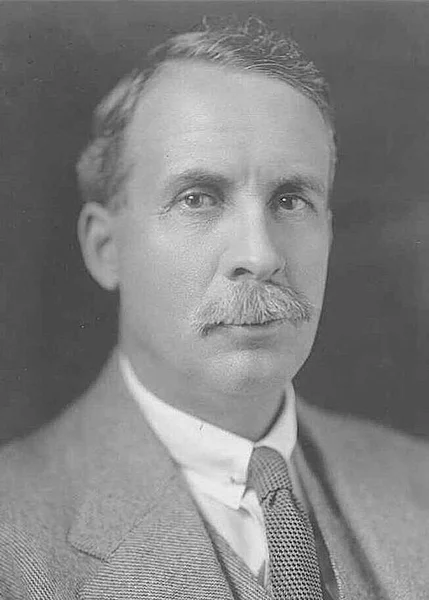
Documents from the National Film and Sound Archive 3 show footage from that era, often used in documentaries about the event. These archives confirm that although military resources were used, the operation was never planned as a large-scale military campaign, but as an emergency measure that spiraled out of control. The lack of coordination between local authorities and the Ministry of Defense was a key factor in the failure.
Clash of Hypotheses: Official Version vs. The Unspoken
The government’s official version has always been that the Emu War of 1932 was a “necessary measure for the protection of national security and food supply.” Historians, however, often challenge this narrative, pointing out that the true goal was political—to show farmers that the government supported them. In reality, the costs of the operation far exceeded the value of the saved wheat.
There is a hypothesis that the entire campaign was used as a cover for testing new types of equipment in field conditions. Some researchers suggest that the failure was exaggerated to hide defects in the equipment, which were later reported to the manufacturers. This theory explains why Major Meredith was so insistent in his reports regarding the “unusual endurance” of the birds—it was the perfect excuse for the lack of results.
The unspoken truth is that the emus were not an “enemy,” but simply victims of an ecological imbalance caused by human activity. The farmers, struggling for survival, were forced to seek help from the army because they had no other tools for defense. The archives lack data on how the soldiers themselves felt, but it is clear they were placed in an absurd situation that undermined the authority of the army in the eyes of the public.
The contradictions do not end there. Some sources claim that after the first failure, the government considered a new operation, but the idea was rejected for fear of international scandal. This reveals how desperate the authorities were to put an end to this embarrassment, which had become the subject of mockery in the global press. In the end, nature won, and the humans retreated, leaving behind only empty shell casings and trampled fields.
Resolution, Traces in Time, and the Unclosed Page
After the military withdrew, the emu problem did not magically disappear. Farmers returned to traditional methods of protection—sturdy fences and individual hunting parties, which proved far more effective than machine guns. The Emu War of 1932 remains in history as one of the greatest failures of state administration, a lesson in humility before the forces of nature.
Today, the site of the events in Campion is quiet and peaceful, and the memory of the “war” is kept only in local museums and archives. It is interesting how the event became a cultural phenomenon—today it is a symbol of the absurd and is often cited in internet culture as proof that sometimes even the most powerful armies cannot defeat nature. The question that remains open is whether this was a unique case or simply the best-documented example of human inability to control the environment.
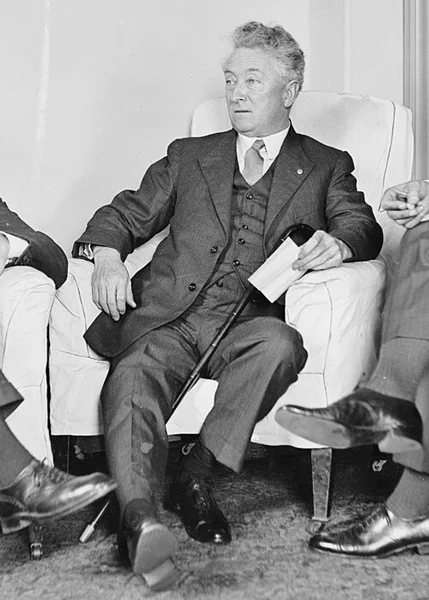
Every time we look at those dusty fields, we must remember that history is not always written by the victors. Sometimes it is written by those who stood against the impossible and lost, leaving behind a story that makes future generations smile with bitterness. Will we ever learn to coexist with the wild world, or will we continue to wage wars that are doomed to failure before the first shot is fired?