The Varna Necropolis: Gold That Tells of Power Before Recorded History
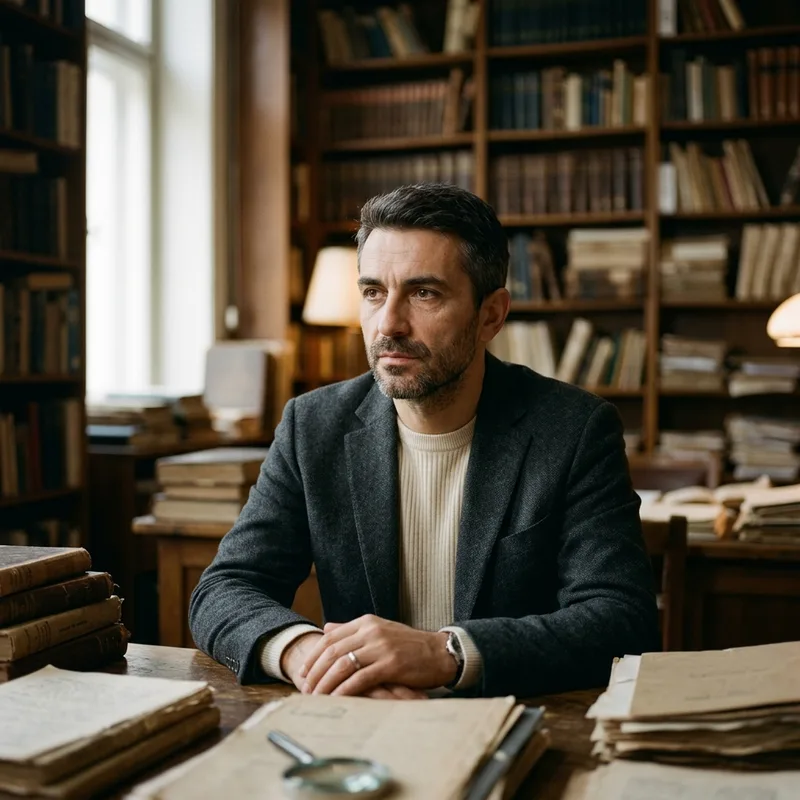
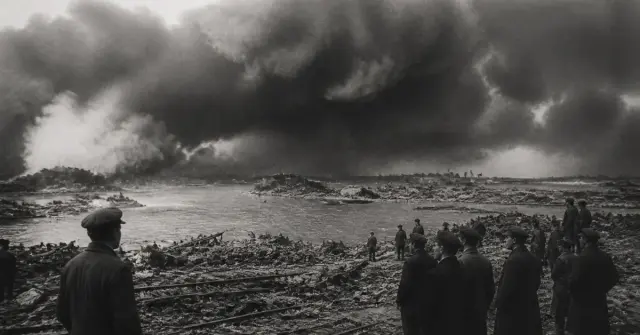
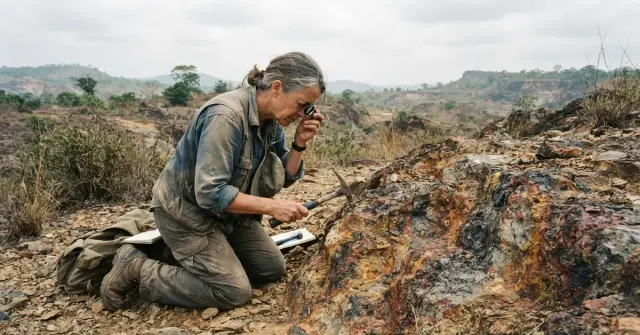
Illustrative reconstruction for the article.
In the autumn of 1972, excavation work in the western industrial zone of Varna uncovered something that did not belong to the modern construction site. The find turned out to be a necropolis from the Chalcolithic (Copper Age). While the gold and copper artifacts attracted attention from the very first graves unearthed, the value of the discovery far exceeds the worth of the metal itself.1
Beneath the earth, a society emerged whose members were not laid to rest in the same manner. The objects raise questions about prestige, social belonging, and power—and about people whose personal names did not survive alongside their gold.
How far back does this discovery take us?
The Regional Historical Museum in Varna dates the necropolis to approximately 4600–4300 BC. This is the fifth millennium BC, long before medieval states and modern national borders. The findings are linked to early agricultural communities in the northeastern part of the Balkan Peninsula.2
Today's location makes them part of Bulgaria's cultural heritage. However, this is not a basis to automatically label these ancient people as "Bulgarians" in the modern historical sense. On the contrary: the true interest lies in encountering a society that does not fit into our familiar political labels.
When the distance of time is lost, prehistory easily turns into a convenient origin myth. It is far more exciting to maintain that distance and ask what we can understand despite it.
Not just treasure, but human relationships
The museum describes the necropolis as evidence of a community with varying social and material status, complex organization, and established power structures.1 This is the essential direction of the interpretation: not just "a lot of gold," but unevenly distributed markers of status.
Still, a wealthy burial is not a fixed job description. It does not automatically imply a specific name, title, or history of governance. The items show how the individual was presented at the time of burial; for a complete picture of their life, other data is required.
This distinction does not invalidate the discovery; it makes it more human. We see the community's decision on what to place beside the deceased and how to organize their place among the others. But we do not hear all the conversations, rules, and conflicts behind that decision.
Why artifacts must remain in context
In its presentation of the necropolis, the museum examines jewelry, tools, and vessels together. Thus, the narrative is not limited to the glittering finds but encompasses life and social relations during the Copper Age.2
For the reader, this is an invitation to look at what does not immediately catch the eye. A vessel is no less important just because it cannot be measured in carats. The arrangement, proximity, and differences between objects can raise questions that a single display-case item cannot pose on its own.
Imagine a book where only the beautiful letters are preserved, but the sentences have been erased. Such a loss of connection would make the reading poorer. Therefore, the archaeological narrative must preserve not only the object but its place within the discovery.
Even the word "wealth" requires caution. We see precious material, but we do not automatically know all the meanings the community invested in it. Prestige, ritual, and memory can meet in a single object without being reduced to its current market price.
A discovery that continues to ask questions
The fiftieth anniversary of the discovery was marked by an international scientific conference dedicated to new horizons in prehistory.3 The very choice of theme reminds us that this landmark find is not a closed conversation. New approaches can change the questions we ask of long-known objects.
The Varna Necropolis is among the stories that launch our Bulgarian Histories section. Here, the mystery is not an unproven curse, but the vast gap between what has survived and what has been lost. The gold remains. The society that placed it in the earth must be understood through the traces left behind. More such encounters with the fragments of the past can be found in Secrets from the Past.
Sources
- Donation Campaign for the Varna Necropolis — Regional Historical Museum — Varna
- Exhibition "The Oldest Gold of Mankind" — Regional Historical Museum — Varna
- International Conference "New Horizons in Prehistory" — Regional Historical Museum — Varna