
The Dead Sea Scrolls: A Library That Tells More Than One Story

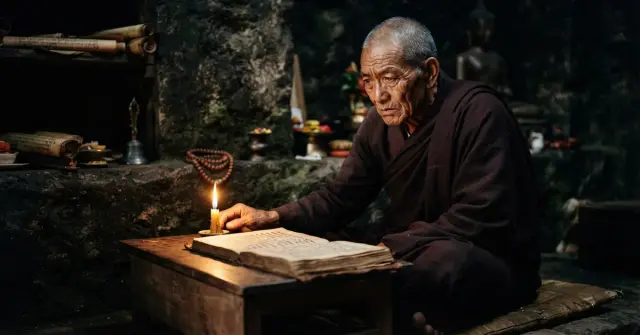
Illustrative reconstruction for the article.
In 1947, Bedouin shepherds discovered the first seven scrolls in a cave near Qumran, on the northwestern shore of the Dead Sea. Subsequent findings in other caves followed. Today, the collective term encompasses materials that were not discovered all at once and do not belong to a single text.1
This is the first correction to the popular perception. We are not dealing with a sealed book opened to a single forbidden page. We are looking at a multitude of manuscripts and fragments, among which researchers must establish connections, differences, and historical context.
What the Texts Contain
The Israel Antiquities Authority distinguishes between biblical manuscripts and other religious works: interpretations, prayers, rules for communal life, and various literary forms. While Hebrew is the most frequently used language, there are also Aramaic and Greek texts. The materials themselves are also not uniform.2
This diversity is crucial. When a modern narrative speaks of "the message of the scrolls," we must ask which specific manuscript is being referenced. A rule for a particular community is not automatically a universally held belief for everyone in the region. A transcription of a known text and its subsequent revision are not the same genre.
The historical value lies precisely in the ability to compare these differences. Sometimes they reveal the stability of a text; at other times, they show variations in spelling or interpretation. Neither the similarities nor the differences should be turned into a sensation without concrete evidence.
A Closer Look at One Manuscript
The Israel Museum presents the "Genesis Apocryphon" as one of the original seven scrolls. It retells parts of known biblical material and is preserved in a single known manuscript. The 2018 museum exhibition focused on its fragility and the content of that specific fragment.3
Here, the word "apocryphal" should not be used as an automatic synonym for modern fraud or hidden proof of a conspiracy. The object must be examined according to its literary and historical context. The title we use today does not negate the need to read what it actually represents.
A single specimen also possesses material vulnerability. If a section is damaged, there is not necessarily a second copy to easily fill the gap. Restoration requires a clear distinction between visible letters and proposed reconstructions.
Who Assembled This Library?
The connection between the scrolls and specific Jewish communities, including the Essenes, is an important research topic. The official introduction by the Israel Antiquities Authority notes that early general explanations have been challenged and refined. Not all manuscripts can be unconditionally attributed to the same group.2
This does not mean nothing is known. It means that different questions have different degrees of certainty. The dating of the material, the handwriting, the content, and the location of the find provide different types of evidence. A compelling explanation must combine them all.
The same applies to why the texts ended up in the caves. Any reconstruction of the intentions of ancient people must remain tied to the evidence, rather than a desire to imbue them with a dramatic secret.
The fragment also carries a particular risk for the reader: we easily assume the remaining words are representative of the whole that is missing. Therefore, the gaps must remain visible in the explanation. Restoring them is a process of reasoned argument, not a license to add the most exciting plot possible.
Discovery Continues Long After the Find
The history of the first scrolls involves purchases, relocations, and a gradual assembly into a museum collection.1 After the physical discovery, other tasks began: preservation, description, photography, and deciphering. The act of discovery itself does not immediately create complete knowledge.
In Secrets of the Past, these materials deserve a place as evidence of a real intellectual world. They do not need to promise the overturning of every known history. It is enough that they allow us to see more accurately how people preserved, transmitted, and discussed their texts—and where their traces remain incomplete.
Sources
- Digital Dead Sea Scrolls — Discovery — Israel Museum
- The Dead Sea Scrolls — Introduction — Israel Antiquities Authority
- Genesis Retold: An Exceptional Dead Sea Scroll — Israel Museum