
The Secret Library of Timbuktu: A Mission to Save Human Memory

AI Image - Copyright © Realniistorii.com
The clock on the wall in Abdel Kader Haidara’s small room read exactly 3:14 AM when the heavy sound of boots on the sand outside shattered the silence. The air in the desert city was freezing, thick with the scent of dry earth and a burgeoning fear that felt like static electricity on the skin. In that moment, while the world outside slept, Haidara held something far heavier than paper—he held the survival of Mali’s centuries-old culture. Every movement had to be silent, for just a few blocks away, extremist patrols had already begun their campaign to destroy every trace of a preceding civilization.
On that night in 2012, it became clear that the secret library of Timbuktu was facing its most critical test of survival. Thousands of priceless manuscripts, preserving knowledge of astronomy, medicine, mathematics, and poetry, were under direct threat of fire and ruin. This was not merely the theft of objects, but an attempt to amputate human memory, carried out by fanatics who feared the power of the written word. The city's residents, having become the silent guardians of history, had to decide whether to remain passive witnesses to the ashes or to become heroes in one of the most daring rescue operations in modern history.
Chronicle of the Event
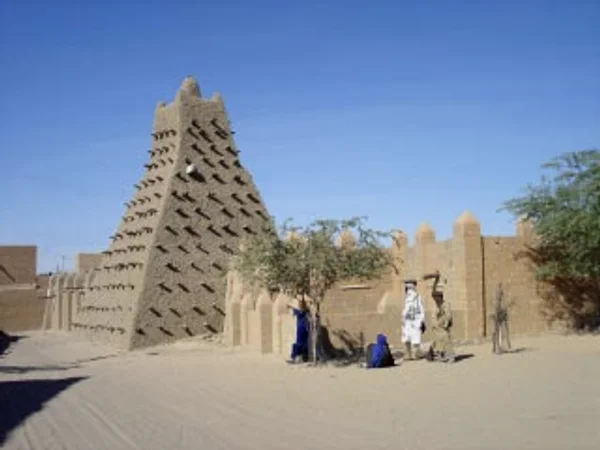
When the sun rose over Timbuktu in the spring of 2012, the city was no longer the same, having been turned into a fortress for radical groups. Roadblocks were everywhere, and bans on education and music turned daily life into a constant source of tension and psychological harassment. Abdel Kader Haidara, an archivist by calling, began organizing a network of trusted individuals to collect manuscripts from private homes and state archives. They worked under the cover of darkness, packing thousands of pages into ordinary metal trunks intended for storing food or clothing.
Every one of these volunteers knew that if they were caught with a manuscript in hand, the punishment would be public and brutal. They used old carts, donkey-drawn wagons, and even their personal vehicles to transport the documents outside the city walls. It was a logistical nightmare, conducted in conditions of total paranoia, where any neighbor could turn out to be an informant for the occupiers. The psychological state of the participants was a mixture of adrenaline and a deep, almost religious devotion to their mission, which kept them awake for days.
The operation to save the secret library of Timbuktu required iron discipline and a complete lack of communication via electronic means. People moved along pre-planned routes, avoiding main patrols and using the narrow alleys of the old city. Every scroll removed was a small victory against oblivion, and every successfully hidden trunk was another nail in the coffin of the attempts at cultural cleansing. These people were not soldiers, but their courage placed them on the front lines of the battle for truth, inspiring many around the world interested in inspiring examples of civil resistance.
The Investigation and Hidden Clues
After the dust of the occupation settled, international teams of experts began investigating the scale of the losses, but they discovered strange discrepancies between the expected and the actual state of the archives. UNESCO protocols 1 confirm that a large portion of the documents had disappeared just before the arrival of the radical elements at the libraries. There were no signs of a struggle in the archives, which suggested that the evacuation had been carried out in an extremely organized and pre-planned manner. Reports from local guardians mentioned "invisible hands" that moved thousands of pages right under the noses of the patrols.
"We were not saving paper; we were saving the soul of our ancestors. When the enemy arrived, they found only empty shelves, because we knew that if memory burns, we cease to exist as a people." — Testimony of an operation participant, Timbuktu Manuscripts Project 2
Physical evidence found later in abandoned basements included torn packaging and remnants of wax used to seal the trunks against moisture and dust. There were also strange inconsistencies in the accounts of some local residents who initially denied knowing the whereabouts of the manuscripts, fearing retaliation. The investigation revealed that some trunks had been carried across the desert for hundreds of kilometers, hidden under bags of grain—a brilliant way to conceal the precious cargo.
In these documents, one often finds marginal notes that shed light on the daily lives of people from the 14th and 15th centuries. Researchers found that the secret library of Timbuktu contains texts that overturn our perception of medieval Africa. These were proofs of a developed administration, advanced scientific knowledge, and deep philosophical thought that did not fit into the Eurocentric model of history. The fact that these documents survived is a true miracle, fueled by the systematic work of people who understood the value of recorded knowledge.
Clash of Hypotheses: Official Version vs. The Unspoken
Official reports from international organizations often downplay the risk taken by local residents, presenting the rescue as a "logistical operation with international aid." In reality, archives from that time show that no major organization provided direct support during the evacuation itself, as the region was completely isolated. This is a key contradiction that leads historians to question the official version of a "coordinated international mission." The truth is much more personal and emotional—it was an act of pure altruism by ordinary people.
There are alternative archival data suggesting that some of the manuscripts were hidden in secret niches in mosques that no outside observer knew about. Some sources claim that sacred texts were built into the walls of homes to protect them from the desecration of infidels. These unspoken facts cast doubt on the effectiveness of the official conclusion that "most manuscripts were successfully taken out of the city." Perhaps some of them still lie buried under the foundations of Timbuktu, waiting for better times.
Why do official sources avoid acknowledging the role of local residents to its full extent? Perhaps because it would admit the failure of international institutions to protect cultural heritage in time. Historians analyzing the events of 2012 often point out that the discrepancy between reality and official documents is a defense mechanism for institutions. The hidden documents, which will only be declassified after decades, will likely reveal a much more complex and dangerous game of cat and mouse between the guardians of the secret library of Timbuktu and their pursuers.
Resolution, Traces in Time, and the Unclosed Page
Today, years after the dust has settled, Timbuktu is slowly recovering, but the memory of that night remains alive in the stories of the survivors. The manuscripts that were saved are now the subject of a massive digitization project, but many wonder if the originals will ever return to their homes. Strange coincidences, in which some of the rarest texts appear in private collections around the world, fuel rumors that not all were saved with good intentions.
The final chapter of this story remains unclosed, as there are still missing fragments of thousands of pages whose fate is unknown. Human memory is fragile, but thanks to the bravery of a few, it was not erased from the face of the earth. If you ever visit this ancient city, listen carefully to the sound of the desert wind between the walls of the houses. It may be telling stories that no one has read yet, and asking questions to which we have yet to find answers in the shadows of history.